
Of all the visas Nepali travelers ask us about, the Schengen visa comes with the most anxiety — and honestly, some of that’s fair. The document list is longer than most, the financial proof requirement is stricter, and there’s no visa-on-arrival option to fall back on. But “harder than a Thailand e-visa” isn’t the same as “genuinely difficult,” and thousands of Nepali travelers get approved every year once they understand exactly what’s expected.
This guide walks through the real process — what you need, what it costs, how long it takes, and where applications from Nepal tend to go wrong. If you’d rather have someone manage the file for you, that’s exactly what a proper global visa service handles from start to finish.
Do Nepali Citizens Need a Schengen Visa?
Yes. Nepal is not on the Schengen visa-exemption list, so a full visa application is required before travel — there’s no visa-on-arrival or e-visa shortcut. This is worth stating clearly because some general travel sites conflate Nepal with countries that only need the newer ETIAS travel authorization; that only applies to passport holders who already enter Europe visa-free (US, UK, and similar), which does not include Nepal.
A Schengen visa, once approved, lets you travel across the 27-country Schengen Area on a single visa, for up to 90 days within any 180-day period.
Documents You’ll Need
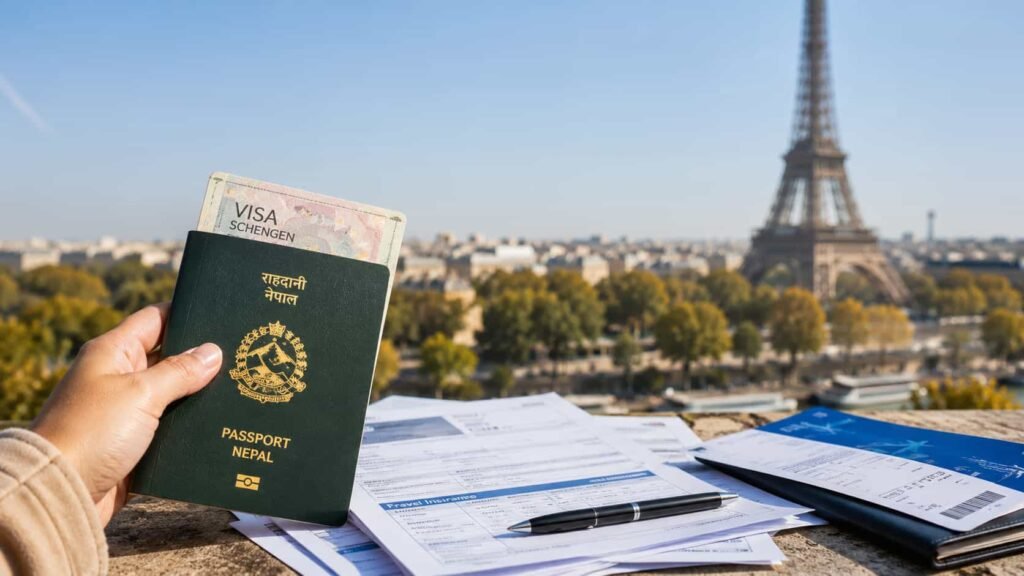
The list looks long on paper, but it comes down to proving four things: who you are, why you’re going, that you can afford it, and that you’ll come home. The core set typically includes:
- Valid passport (usually needs at least 3 months’ validity beyond your return date, with at least 2 blank pages) plus copies of all pages
- Completed and signed Schengen visa application form
- Two recent passport-size photos meeting the exact specification
- Confirmed flight itinerary (round-trip)
- Hotel bookings for the entire stay, or an invitation letter if staying with a host
- Bank statements showing sufficient funds for the trip duration
- Employment letter or business registration, showing your reason to return home
- Travel insurance with a minimum of €30,000 medical coverage, valid for the full Schengen Area
- Cover letter explaining the purpose and itinerary of the trip
Every embassy has slightly different specifics on top of this baseline, so it’s worth checking the requirements page of the specific Schengen country you’re applying through before finalizing your visa document checklist.
Step-by-Step: How to Apply
- Choose the right country to apply through. Apply at the embassy or visa center of the country you’ll spend the most nights in. If your nights are split evenly, apply through your first port of entry.
- Book your appointment. Most Nepali applicants apply through VFS Global in Kathmandu, though some Schengen countries route applications through their New Delhi mission depending on representation agreements — worth confirming before you plan your appointment date.
- Prepare your documents. Use the checklist above as a base, then cross-check against the specific country’s published list.
- Attend your appointment. This typically includes biometric data collection (fingerprints and photo) if it hasn’t been done for a Schengen application in the last several years.
- Wait for processing. Standard processing runs around 15 working days, though this can extend during peak travel seasons (summer, December holidays).
- Collect your passport. Whether approved or not, your passport is returned with the decision. Approved visas will show the validity dates and permitted number of entries.
Cost and Timeline
Budget for the visa fee itself (this varies by country and changes periodically, so always confirm the current amount on the embassy or VFS site rather than relying on older blog posts), plus the VFS service charge if applying through a visa center. On top of the visa fee, factor in travel insurance and any courier or biometric service charges.
Apply at least a month before your intended travel date. Standard processing is around 15 working days, but delays happen, especially during peak season — and a visa fee is generally non-refundable even if your application is denied, so it pays to get the file right the first time rather than rushing it in late.
Common Mistakes That Slow Nepali Applications Down
- Booking non-refundable flights before visa approval. Use a reservation or hold instead where possible; embassies need to see an itinerary, not necessarily a paid, non-cancellable ticket.
- Thin or unexplained bank statements. A large deposit right before applying, without explanation, tends to raise more questions than it answers.
- Mismatched details across documents. Name spelling, dates, and addresses need to match exactly across your passport, bank statement, and booking confirmations.
- Incomplete insurance coverage. Insurance below the €30,000 minimum, or that doesn’t cover the full Schengen Area, gets flagged immediately.
These overlap heavily with the top reasons visas get rejected in general — Schengen applications aren’t a special case, they just have less room for error given how thorough the review process is.
Frequently Asked Questions
Which Schengen country should I apply to from Nepal? Apply through the embassy or visa center of the country where you’ll spend the most nights during your trip. If it’s split evenly across multiple countries, apply through the country of your first entry.
How long does Schengen visa processing take from Nepal? Standard processing is typically around 15 working days from the date of your appointment, though it can take longer during peak travel seasons.
Is the Schengen visa fee refundable if my application is rejected? No, the visa fee is generally non-refundable regardless of the outcome, which is exactly why getting the documentation right the first time matters.
Do I need travel insurance before applying for a Schengen visa? Yes — proof of travel insurance with at least €30,000 in medical coverage, valid across the Schengen Area, is a mandatory document at the time of application, not something you can add afterward.
Final Thought
A Schengen visa from Nepal is one of the more document-heavy applications out there, but “heavy” just means thorough — every requirement exists to answer a specific question an officer will ask anyway. Get the paperwork consistent, the financial proof clear, and the itinerary realistic, and there’s no reason a well-prepared application shouldn’t succeed.
If you’re planning a Europe trip and want the visa handled alongside your itinerary rather than separately, explore our packages to see how it fits together.