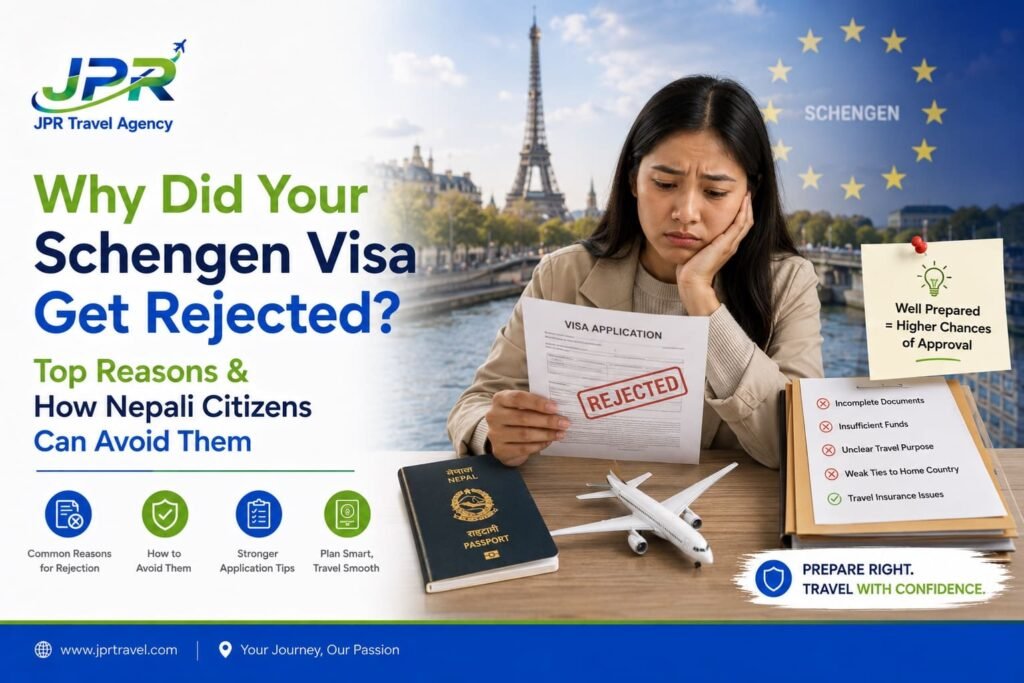
Getting a Schengen visa rejection can be frustrating, especially after preparing documents, arranging your trip and paying the visa fee.
But a refusal does not automatically mean you cannot get a Schengen visa in the future. A new application must be assessed on the basis of all available information, and a previous refusal should not automatically lead to another refusal.
The most important step is to understand why your visa was refused. The refusal decision identifies the reason or reasons for the decision, and applicants also have the right to appeal according to the procedure of the Schengen country that made the final decision.
For Nepali applicants, the biggest mistake is often reapplying with almost exactly the same documents. Instead, identify the weakness, correct it where possible and submit a new application that genuinely addresses the problem.
1. Your Purpose of Travel Was Not Clearly Justified
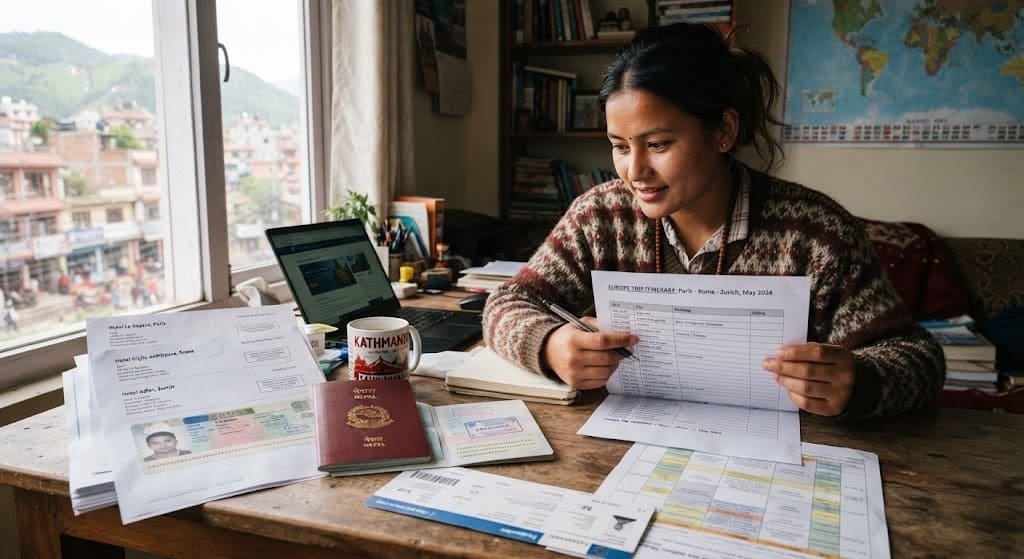
The visa officer needs to understand why you are travelling, where you will stay, how long you plan to stay and whether your itinerary makes sense.
A complicated itinerary is not necessarily better.
For example, planning to visit six countries in 10 days may look less realistic than a simple 10-day trip covering two or three nearby destinations.
Your:
Visa application form
Travel dates
Hotel bookings
Transportation arrangements
Day-by-day itinerary
should support the same travel plan.
Under the Schengen Visa Code, a visa can be refused when the applicant does not sufficiently justify the purpose and conditions of the intended stay.
How to avoid it
Create a realistic itinerary based on the trip you actually plan to take. Before submitting your application, check that all dates, destinations and bookings are consistent.
2. You Applied to the Wrong Schengen Country
Many applicants hear that a particular Schengen country is “easier” for getting a visa and choose to apply there.
This is not a good strategy.
Your application should be submitted to the country responsible for examining your trip based on the applicable Schengen rules, generally the country that is your main destination. If there is no main destination, the rules on the country of first entry may apply.
For example, if your itinerary includes:
- France: 3 nights
- Italy: 8 nights
- Switzerland: 2 nights
Italy is clearly the main destination based on the length and purpose of the stay.
Do not artificially change your itinerary just to apply through a particular embassy.
3. Your Financial Situation Did Not Match Your Trip
There is no single bank balance that guarantees a Schengen visa approval.
The official requirement is to demonstrate sufficient means to cover your stay and return journey. The amount required can depend on the destination, duration of travel and circumstances of the application.
The real question is:
Does your financial situation make sense compared with the trip you are planning?
Common problems include:
- Large unexplained deposits before applying
- Income that does not match bank transactions
- An expensive trip that appears unrealistic based on your financial situation
- A sponsor without sufficient supporting evidence
- Financial documents that do not clearly show the source of funds
A sudden deposit is not automatically a reason for refusal. However, if you recently received money from a legitimate property sale, business transaction, loan or other source, you should be able to explain it with genuine supporting documents.
How to avoid it
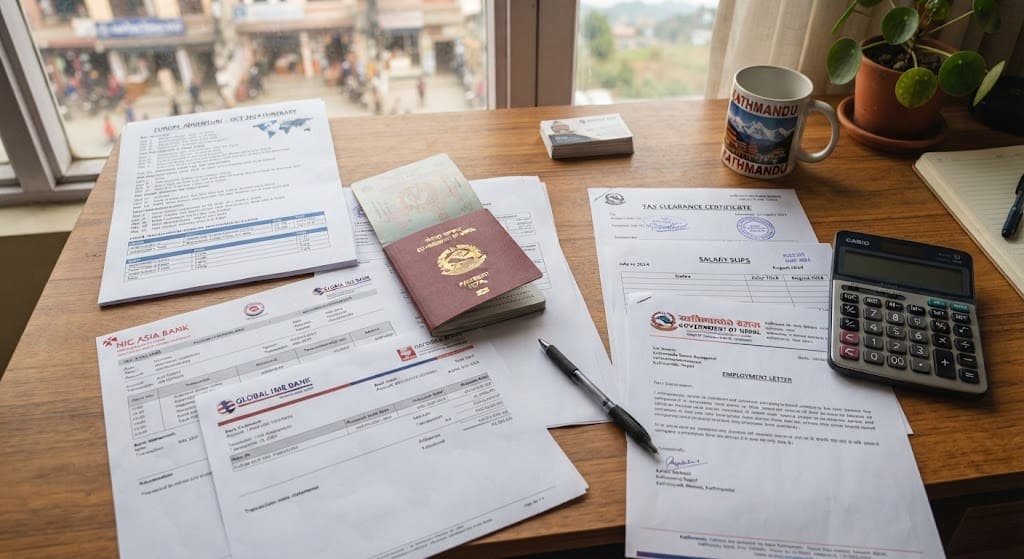
Submit genuine financial evidence such as relevant bank statements, income documents, salary records or business documents required for your application.
Do not temporarily borrow money just to increase your bank balance before applying.
4. Your Documents Were Inconsistent or Not Considered Reliable
A Schengen visa can be refused when there are reasonable doubts about the authenticity of supporting documents, the truthfulness of their contents or the reliability of the applicant’s statements.
For example:
- Your application shows one travel date, but your hotel booking shows another.
- Your employment letter states a salary that does not match your financial records.
- Your itinerary says one country is your main destination, but your hotel bookings show you spending most of your trip elsewhere.
Even small inconsistencies can make an application look poorly prepared.
What to do
Before submitting your application, compare every important document.
Check your:
- Name and passport details
- Travel dates
- Main destination
- Employment or business information
- Income and financial documents
- Hotel bookings and transportation arrangements
Your application should tell one clear and believable story.
5. The Visa Officer Was Not Convinced You Would Return to Nepal
This is one of the most common concerns applicants have after receiving a refusal.
The legal issue is whether there are reasonable doubts about your intention to leave the Schengen Area before the visa expires.
There is no single document that automatically proves you will return to Nepal.
Instead, submit evidence that genuinely reflects your situation.
For example:
Employees may provide:
- Genuine employment verification
- Position and salary details where required
- Approved leave
- Evidence of an ongoing job
Students may provide:
- Current enrolment documents
- Evidence that studies will continue
Business owners may provide:
- Business registration
- Relevant financial or tax records
- Evidence that the business is genuinely operating
The goal is not to submit as many documents as possible. It is to provide credible evidence that accurately represents your life and commitments.
6. Your Travel Medical Insurance Did Not Meet the Requirements
Travel medical insurance is an official Schengen visa requirement where applicable.
The insurance must generally be valid throughout the Schengen territory, cover the entire intended stay and provide minimum coverage of €30,000 for relevant medical and repatriation expenses.
Before purchasing insurance, check that:
- Your travel dates are fully covered
- The policy covers the required geographical area
- The minimum coverage requirement is met
- The information matches your application
7. Previous Visa or Travel History Created a Problem
Previous refusals do not automatically mean that your next visa will also be refused. The Visa Code states that a previous refusal should not automatically lead to refusal of a new application.
However, previous immigration problems can still be relevant.
These may include:
- Previous visa overstays
- Violating visa conditions
- Providing false information
- Exceeding the permitted stay under the 90/180-day rule
Always answer questions about previous visas and travel history truthfully.
What Should You Do After a Schengen Visa Rejection?
Do not immediately submit the same application again.
Step 1: Read the refusal letter
Identify the exact refusal reason selected by the visa authority.
Step 2: Find the actual weakness
Ask yourself:
- Was my travel purpose clearly documented?
- Were my financial documents sufficient and believable?
- Did all my documents match?
- Was my employment, business or study situation clearly explained?
- Did the application give the authorities reasons to doubt that I would leave before the visa expired?
Step 3: Decide whether to appeal or reapply
Applicants have the right to appeal a visa refusal according to the national procedure of the country that made the final decision.
In some cases, an appeal may be appropriate. In others, it may be more practical to fix the weaknesses and submit a stronger future application.
How Nepali Citizens Can Improve Their Chances of Getting a Schengen Visa
There is no guaranteed approval formula. However, you can improve the quality of your application by:
- Applying to the correct Schengen country based on your actual travel plan.
- Creating a realistic itinerary rather than adding unnecessary destinations.
- Showing genuine financial evidence and being able to explain major transactions.
- Keeping all documents consistent.
- Using the latest country-specific visa checklist, rather than relying on an old blog or advice from friends.
- Providing genuine evidence of your employment, business or studies.
- Never submitting fake or altered documents.
If you need assistance understanding visa documentation requirements or arranging your travel, you can explore JPR Travel’s International Tourist Visa Services and Global Visa Services.