
Bali is a year-round destination, but the experience changes noticeably depending on when you go. The biggest difference is not temperature. Bali stays warm throughout the year. What changes more is rainfall, humidity, sea conditions, tourist numbers, hotel demand, and how busy popular places feel.
For most travelers, April to October is the main dry-season window, while November to March is the wetter season. July and August generally bring the strongest combination of dry weather and international holiday demand, while May, June and September can offer a useful balance between weather and crowds. Indonesia’s official tourism information also notes that Bali’s seasons are becoming less predictable, so exact conditions can vary from year to year.
If you’re planning a complete holiday from Nepal, the right travel month can also affect your Bali tour package from Nepal, flight availability, accommodation choices and sightseeing plans.
So, what is the best time to go to Bali? It depends on what you want from the trip.
What Is the Best Time to Visit Bali?
For a first Bali holiday, May, June or September can be particularly practical months to consider. They sit outside the main July-August rush while still falling within Bali’s broader dry-season period.
For the driest and most consistently popular period, July and August are the months to know. They attract large numbers of international visitors, and demand is especially noticeable around Bali’s beach resorts and major attractions.
For lower visitor demand and a greener landscape, the wetter months from November to March can work well, provided you are comfortable planning around rain. Travelers who prefer exploring beyond the busiest tourist areas can also explore our guide to Bali hidden gems and must-see places.
There is no single month that is perfect for everyone. A beach holiday, honeymoon, surfing trip, cultural itinerary and budget trip can all point toward different dates.
If you’re traveling as a couple, the timing of your trip can also make a difference to your overall experience, especially when planning a romantic getaway. See our guide on why Bali is a popular honeymoon destination for Nepali couplesfor more ideas.
Bali at a Glance
| Travel Priority | Months to Consider & What to Expect |
|---|---|
| Best overall balance | May, June, September — Generally drier conditions with less peak-season pressure. |
| Driest weather | July, August — Dry-season conditions, but higher visitor demand. |
| Cooler-feeling weather | July, August, September — Slightly lower temperatures compared with the hotter and more humid months. |
| Fewer tourists | November–March — Wetter conditions but generally lower international visitor demand. |
| Beach & outdoor activities | May–October — Better odds of dry days for beaches, sightseeing and outdoor plans. |
| Festive atmosphere | Late December–early January — Christmas and New Year travel can make Bali very busy. |
| Green scenery | Rainy season (November–March) — More frequent rainfall can create lush, vibrant tropical landscapes. |
Understanding Bali’s Weather and Seasons
Bali has a tropical climate, so you should not expect a conventional spring, summer, autumn and winter pattern.
Instead, the island broadly moves between dry and wet seasons. Indonesia Travel identifies April to October as the dry season in Bali and November to March as the wet season, while also warning that changing climate patterns have made seasons less predictable.
Temperature variation is relatively small compared with rainfall variation. Indonesia Travel describes coastal areas of Indonesia as averaging around 28°C, with inland and mountain locations generally cooler.
That is why searching for the “coolest time to visit Bali” can be slightly misleading. July and August are cooler by Bali standards, but this is still a tropical destination.
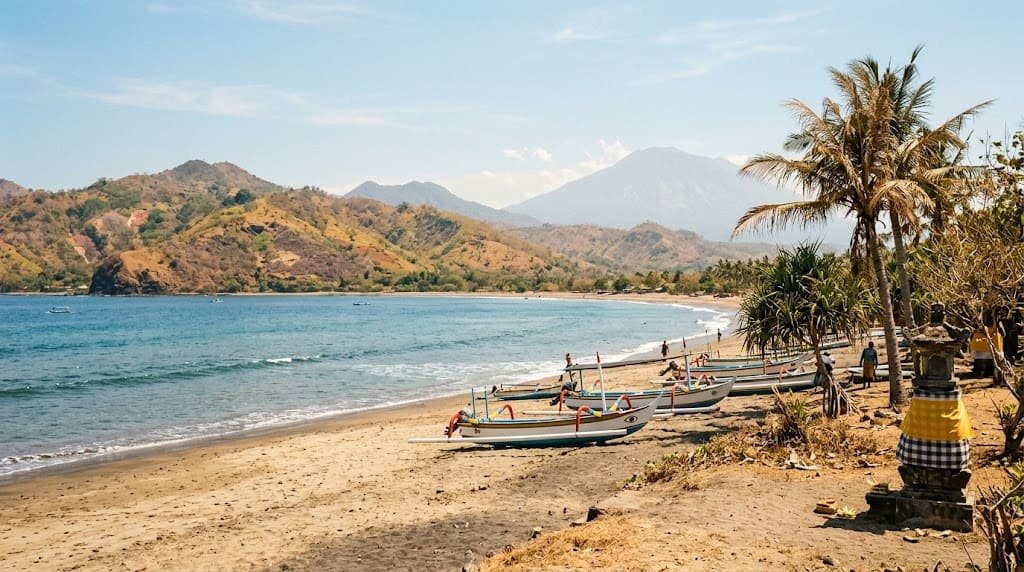
Dry Season: April to October
The dry season is generally the easiest period for travelers planning lots of outdoor activities. Beach days, sightseeing, road trips, temple visits and excursions are less dependent on avoiding rain.
This is also a good period for travelers who want to explore more than Bali’s busiest beach areas. If you are looking for quieter attractions, viewpoints and less-touristy experiences, see our guide to Bali hidden gems and must-see places.
The driest part of the year is generally around July to September. Climate averages for Denpasar show August among the coolest and driest months, although exact rainfall and temperature figures vary depending on the dataset and location.
Wet Season: November to March
The wet season brings more frequent rainfall and higher humidity. Rain does not necessarily mean that every day is a washout, but weather-dependent activities need more flexibility.
The benefit is that Bali can look exceptionally lush, and visitor demand is generally lower outside the Christmas and New Year period.
For a trip focused on cafés, temples, spas, food, culture and flexible sightseeing, wet-season travel can still work well. Travelers planning their first international holiday from Nepal can also review our must-know things before traveling abroad before finalizing their itinerary.
What Is the Busiest Time in Bali?
The busiest period in Bali is generally July and August, followed by another significant surge around Christmas and New Year.
Recent official statistics show why July and August are important when planning. Bali recorded 697,809 direct international tourist arrivals in July 2026, up 15.34% from June’s 605,013. In 2025, Bali recorded 697,107 arrivals in July and 682,866 in August.
The year-end holidays also create a noticeable increase. Bali recorded 572,668 direct international arrivals in December 2025, compared with 483,364 in November. Star-rated hotel occupancy also increased from 57.97% in November to 60.88% in December.
This does not mean every part of Bali feels equally crowded. Southern tourist areas such as Seminyak, Canggu, Kuta and surrounding beach districts can feel much busier than quieter areas elsewhere on the island.
Indonesia Travel also cautions that roads in heavily populated areas can become congested during peak periods, with religious processions sometimes affecting traffic.
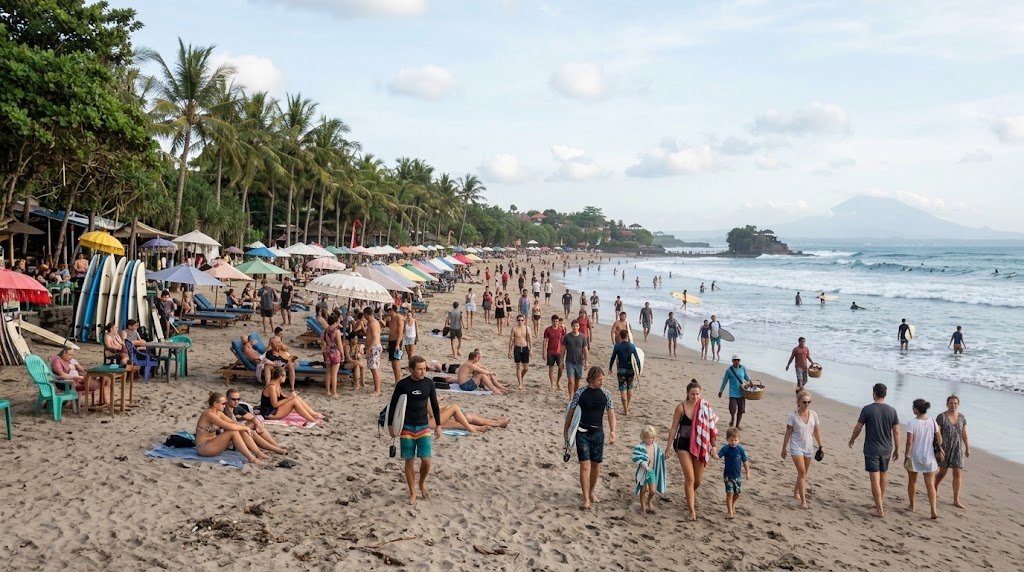
July and August: Great Weather, Bigger Crowds
When people ask about the Bali best time to go, July and August often come up first.
These months fall within the dry season and generally provide favorable conditions for beaches, sightseeing and outdoor activities. They are also among Bali’s coolest months by average temperature, although the difference is modest because the island remains tropical year-round.
The trade-off is demand.
European summer holidays and Australian winter school holidays overlap with this period, contributing to greater visitor numbers. Recent Bali tourism statistics also show strong visitor and hotel-occupancy figures around July and August.
If your priority is reliable dry-season weather, July or August can make sense. If your priority is quiet beaches and lower demand, another month may fit better.
For travelers who would rather balance good weather with a less intense travel atmosphere, May, June and Septemberare worth comparing with the peak July-August period.
May, June and September: A Useful Shoulder-Season Window
May, June and September are worth considering when you want a good time to visit Bali without deliberately choosing the busiest part of the year.
The weather is generally more favorable than during the heart of the wet season, while July and August bring stronger holiday demand.
September is particularly interesting for travelers who want to stay within the dry-season pattern while moving beyond the main July-August rush.
For couples planning a Bali getaway, these months can also be useful when trying to balance weather, sightseeing and a more relaxed atmosphere. See our guide to why Bali is a popular honeymoon destination for Nepali couples for additional honeymoon planning ideas.
For 2026 specifically, the latest Bali climatology bulletin published by BMKG on September 18 forecasts generally low rainfall for September and October, with November showing a wider rainfall range. BMKG also stresses that operational forecasts should be checked again as conditions change.
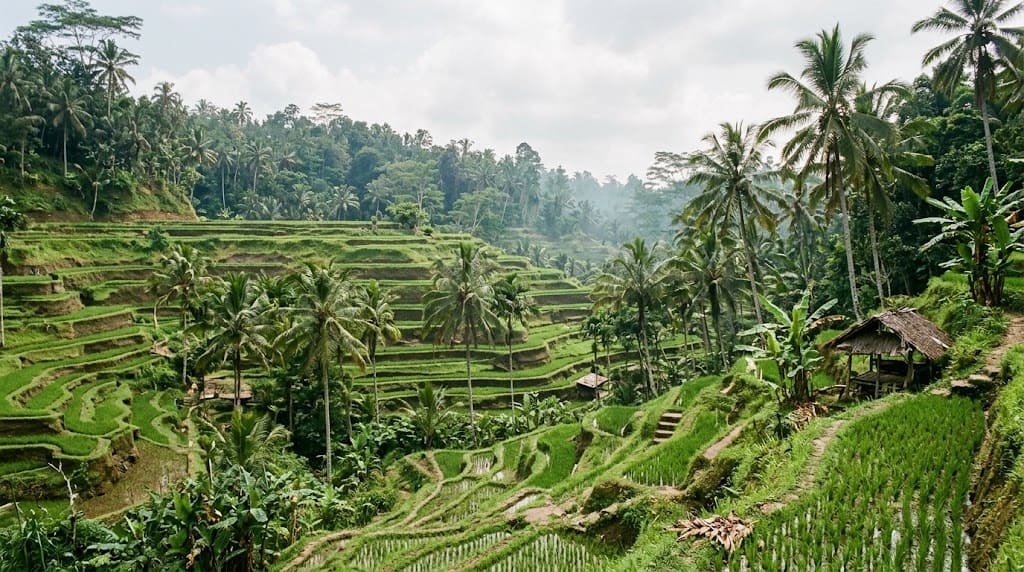
What Is the Coolest Time to Visit Bali?
Bali does not have a cold season. However, July, August and September are generally among the coolest-feeling months, particularly compared with the warmer and more humid part of the year. Long-term Denpasar climate averages show August with an average high around 26°C in one climate dataset, while March is among the warmest months. Another long-running weather dataset places August among the coolest months overall. The difference is more noticeable when combined with rainfall and humidity. A dry, breezy 27°C day can feel very different from a humid tropical afternoon. For travelers who specifically searched for the coolest time to visit Bali, July through September is therefore the practical answer.What Is the Hottest Time to Go to Bali?
The hottest period is generally around the late wet season and warmer transition months, with March often among the warmest months in Denpasar climate averages. Weather Atlas lists March as having the highest average high temperature in its Denpasar dataset, at about 28.8°C, while August is considerably cooler. November and December can also feel particularly hot because of the combination of warmth and humidity. So, when considering the hottest time to go to Bali, remember that rainfall and humidity are often more important to comfort than a difference of only one or two degrees.Bali Month-by-Month: When Should You Go?
Bali’s travel conditions can change significantly from month to month. The table below gives you a quick way to compare weather, crowds and the type of trip each month may suit best. For travelers coming from Nepal, your preferred month can also affect flight planning and package availability. Once you have chosen your travel window, compare your dates with the Kathmandu to Bali flight guide and explore the Bali tour package from Nepal. Choosing a month based on your priorities rather than simply looking for one “best” month can make your Bali trip much easier to plan.| Month | Weather, Crowds & Best Suited To |
|---|---|
| January | Wet and humid • Lower crowds • Best for budget trips, cafés and cultural experiences. |
| February | Wet and humid • Lower crowds • Best for flexible itineraries and indoor experiences. |
| March | Wet season easing, still warm • Lower to moderate crowds • Good for culture and flexible travel. |
| April | Transition toward the dry season • Moderate crowds • Good for sightseeing and outdoor trips. |
| May | Increasingly dry • Moderate crowds • Good for first-time visitors and couples. |
| June | Dry and comfortable • Moderate to rising crowds • Good for beaches, sightseeing and outdoor activities. |
| July | Very dry and popular • High crowds • Good for beach holidays, surfing and outdoor trips. |
| August | Very dry and slightly cooler • High crowds • Good for beaches, surfing and sightseeing. |
| September | Dry-season conditions • Moderate to high crowds • Good for outdoor trips and couples. |
| October | Transition toward wetter weather • Moderate crowds • Good for flexible sightseeing. |
| November | Wetter and humid • Lower crowds • Good for budget travel and cultural experiences. |
| December | Wet, with a holiday surge • Low to high crowds depending on dates • Good for festive travel and New Year celebrations. |
Best Time to Visit Bali for Beaches and Outdoor Activities
For a trip centered on beaches, temples, waterfalls, rice terraces, island excursions and outdoor sightseeing, the dry-season months from approximately May through October are generally easier to plan.
That does not mean rain is impossible. Tropical weather can change quickly, and sea conditions can vary by coast.
For a more active itinerary, it is useful to schedule major outdoor excursions earlier in the day and keep some flexibility for weather changes.
Travelers planning to explore North Bali should also note that Indonesia Travel recommends the April-to-October dry season for outdoor exploration there, including waterfalls, viewpoints and coastal areas.
Best Time to Visit Bali for a Honeymoon
A honeymoon does not necessarily need the busiest month with the most predictable weather.
For couples who want a combination of pleasant weather and a calmer atmosphere, May, June and September are practical months to investigate.
July and August can also work very well for a honeymoon, especially if dry weather is the priority, but popular beaches, restaurants and attractions can be busier.
For more Bali honeymoon planning ideas, see JPR Travel’s guide to why Bali is a popular honeymoon destination for Nepali couples.
Best Time to Visit Bali for a Lower Budget
The cheaper period is generally associated with the wetter months, particularly January, February, November and parts of March, although prices can change significantly by hotel, event calendar, flight demand and holiday dates.
December is the important exception. Early December can be quieter, but the Christmas and New Year period can bring a sharp increase in demand.
This makes late December very different from early December when considering accommodation and crowds.
For travelers departing from Nepal, it is also worth comparing flight dates before fixing your hotel. You can see JPR Travel’s Kathmandu to Bali flight guide while building your itinerary.
Is the Rainy Season a Bad Time to Visit Bali?
Not necessarily.
The wet season can suit travelers who do not need perfect beach weather every day. Bali’s rice terraces and tropical landscapes can look especially vibrant with more moisture, while indoor experiences such as spas, cafés, restaurants and cultural activities provide alternatives when rain arrives.
The main consideration is flexibility.
A tightly scheduled itinerary with several boat trips and outdoor activities has more exposure to weather disruption than a relaxed trip that can move an excursion to another day.
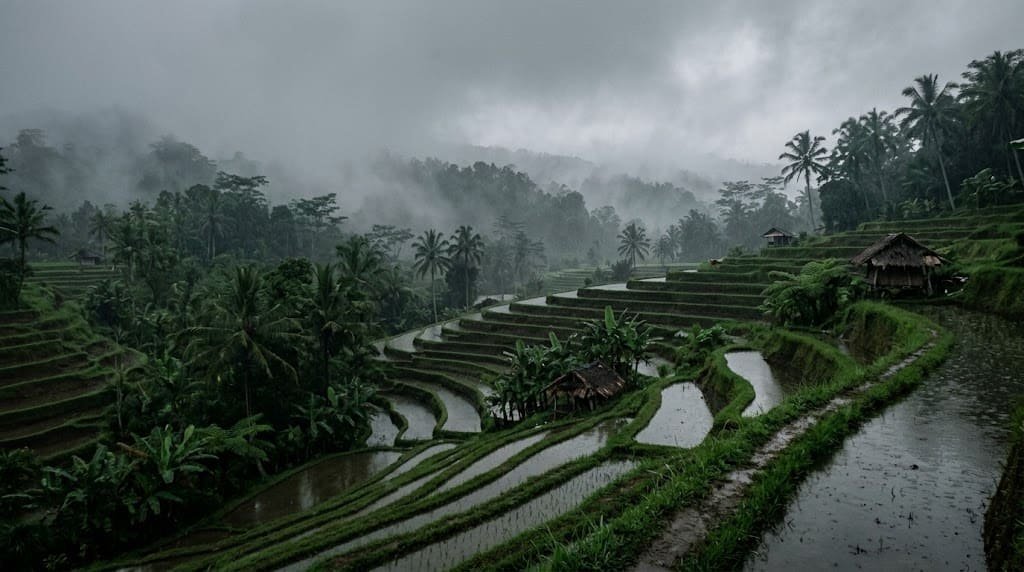
Also remember that “rainy season” does not automatically mean continuous rain from morning to night. Rainfall patterns vary considerably, so check current forecasts rather than assuming the entire trip will be wet.
One Important Bali Travel Date: Nyepi
March or early April can include Nyepi, Bali’s Day of Silence, depending on the Balinese Saka calendar.
This is not an ordinary public holiday. During Nyepi, Bali observes a 24-hour period of silence and restricted activity, and Ngurah Rai International Airport closes for the observance. Indonesia Travel specifically advises travelers to check dates and arrange flights around Nyepi.
This can be a fascinating cultural experience, but it requires proper planning. Do not choose your flight dates without checking the exact Nyepi date for the year you are visiting.
When Is the Ideal Time to Visit Bali for You?
The answer becomes much easier once you decide what matters most.
Choose May, June or September when you want a balance between generally favorable weather and the heavier July-August visitor rush.
Choose July or August when dry-season conditions and outdoor activities are your main priority and you are comfortable with higher demand.
Choose November to March when lower visitor demand, greener scenery and potentially better-value travel matter more than consistently dry weather.
Choose late December to early January when you specifically want the Christmas and New Year atmosphere and do not mind a much busier holiday period.
And before committing to a date, check the latest weather outlook. For travelers visiting in late 2026, BMKG’s September bulletin provides updated three-month rainfall forecasts, which is more useful for near-term planning than relying only on a standard seasonal calendar.
Planning a Bali Trip from Nepal?
For Nepali travelers, the date of travel is only one part of the planning process. Flight schedules, accommodation, trip length and the type of Bali itinerary can make a significant difference.
JPR Travel also has a Bali tour package from Nepal for travelers looking to combine flights, accommodation and sightseeing into one trip.
Before an international trip, it is also useful to review JPR Travel’s guide to things to know before traveling abroad.
For travelers interested in less-visited places rather than only the major tourist areas, read the guide to Bali’s hidden gems and must-see places.
Frequently Asked Questions About the Best Time to Visit Bali
What is the best time to visit Bali?
For many travelers looking for a balance of weather and visitor levels, May, June and September are useful months to consider. July and August are usually drier but also much busier.
What is the best month to go to Bali?
There is no single best month for every traveler. May, June and September are strong options for a balance, while July and August suit travelers who prioritize dry-season conditions.
What is the busiest time in Bali?
July and August are generally the main high-demand months. Christmas and New Year also create a significant holiday rush, particularly in popular tourist areas.
What is the coolest time to visit Bali?
July, August and September are generally among the coolest months, although Bali remains warm and tropical throughout the year.
What is the hottest time to go to Bali?
March is among the warmest months in long-term Denpasar climate averages, while November and December can also feel hot and humid.
Is Bali better in the dry season or rainy season?
It depends on your itinerary. The dry season is easier for weather-dependent outdoor activities, while the rainy season can offer greener scenery and generally lower visitor demand.
Is December a good time to visit Bali?
Early December can be relatively different from the Christmas-New Year period. Rain becomes more common during December, while the final part of the month can become very busy because of holiday travel. Bali recorded 572,668 direct international arrivals in December 2025, up from November’s 483,364.
How far in advance should I plan a Bali trip?
For July, August and the Christmas-New Year period, planning accommodation and major activities earlier is sensible because demand is higher. For quieter months, you usually have more flexibility, although popular hotels and tours can still sell out.