Securing a USA visit visa from Nepal is a dream for many. Whether you want to explore the vibrant streets of New York,visit family in Texas, or attend a short-term business conference, the B1/B2 visa is your gateway. However, the application process culminates in a critical hurdle: the consular interview at the US Embassy in Kathmandu.
For many applicants, the interview can feel intimidating. The truth is, the consular officers are simply trying to verify that you are a genuine visitor who will return to Nepal after your trip. In this comprehensive 2026 updated guide, we will break down the latest embassy rules, the new Visa Bond requirements, frequently asked questions, and insider tips to confidently crack your US tourist visa interview.
2026 Updates: New Rules, Fees, and Wait Times
Applying for a US visa looks slightly different today than it did a few years ago. Here are the most critical updates you must know before you apply:
The 2026 US Visa Bond Requirement
As of August 2026, the US State Department has made its Visa Bond program permanent for citizens of 50 countries, including Nepal. Consular officers now have the authority to require otherwise eligible B1/B2 applicants to post a travel bond before the visa is issued.
- The Cost: Bonds are typically set at $15,000 (default), but can be adjusted to a minimum of $10,000 or a maximum of $20,000 based on your ties and financial circumstances.
- The Process: Do not bring this money to the interview. If required, the officer will instruct you to pay the bond exclusively through the official US government platform, Pay.gov. The bond is fully refunded when you return to Nepal on time.
Current Visa Fees and Wait Times
- Application Fee (MRV): The non-refundable B1/B2 visa fee is currently $185 (roughly NPR 24,420). The US Embassy in Kathmandu does not accept card payments for this fee online; you must pay via a cash deposit slip at designated banking counters in Nepal.
- Interview Wait Times: Due to high demand, appointment wait times in Kathmandu currently range from 4 to 12 weeks. Book your slot well in advance of your planned travel dates.
If you need help navigating these new rules, consult a reliable visit visa consultancy in Nepal.
Top 5 US Visit Visa Interview Questions (and How to Answer Them)
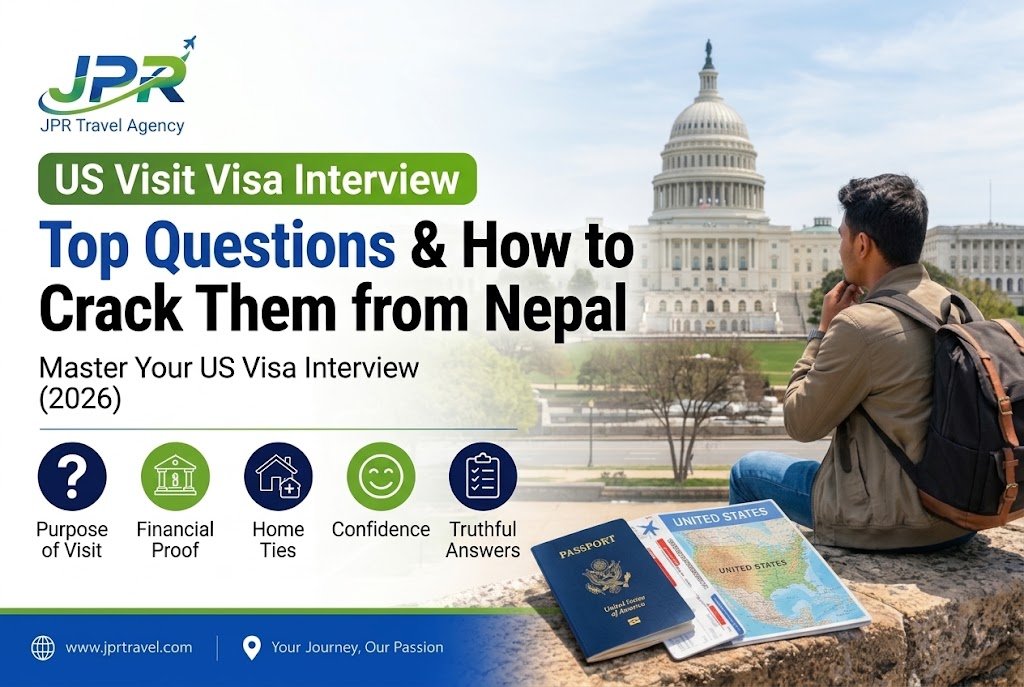
During your interview, the consular officer will typically ask you questions categorized into four main areas: your travel purpose, financial stability, ties to Nepal, and travel history. Here are the top questions you should prepare for:
1. “What is the purpose of your visit to the United States?”
This is almost always the first question. The officer wants to see if your reason for travel is clear, specific, and believable.
- How to Crack It: Be direct. Do not just say “tourism.” Instead, say, “I am taking a 15-day tour of the East Coast,specifically visiting New York and Washington D.C.” If you are attending a conference, state the exact name and dates.
2. “How long do you plan to stay in the US?”
The officer wants to know if your timeline aligns with your stated purpose.
- How to Crack It: State the exact duration (e.g., “Three weeks”). Ensure this answer perfectly matches your DS-160 application form and your flight itinerary. Asking to stay for six months for a simple holiday raises red flags.
3. “How will you fund this trip, and can you cover a visa bond if required?”
With the new 2026 rules, the embassy needs to know you can afford the trip and potentially post a travel bond.
- How to Crack It: If self-funding, mention your profession and savings. State clearly that you are aware of the bond policy and have the financial backing if the officer requests it. Always have your bank statements and tax clearance documents ready.
4. “What do you do in Nepal?” (Ties to your Home Country)
A lack of strong ties to Nepal is the number one reason for visa rejections. The officer needs a compelling reason to believe you will come back.
- How to Crack It: Highlight your permanent employment, business ownership, property, or dependent family members. For example: “I am a Senior Software Engineer at [Company] in Kathmandu, and my employer has granted me a 3-week leave for this vacation.”
5. “Do you have any relatives in the US?”
Honesty is paramount here. The US government has access to vast amounts of data, and lying about relatives in the US will result in a permanent ban.
- How to Crack It: Answer truthfully. If you have an aunt or a sibling there, mention them and state their legal status. Keep your answer brief and do not over-explain.
Expert Tips to Crack the Interview at the US Embassy in Kathmandu
Interviews at the US Embassy are notoriously fast, often lasting only 2 to 5 minutes. Follow these expert tips from the best travel agency in Nepal:
| Interview Strategy | How to Execute It |
|---|---|
| Keep Answers Under 30 Seconds | Provide concise, direct answers. Long explanations invite unnecessary follow-up questions. |
| Master Your DS-160 | Your spoken answers must 100% match what you filled out in your DS-160 form. |
| Do Not Memorize Scripts | Speak naturally. Officers are trained to spot robotic or rehearsed answers. |
| Bring Organized Documents | Keep bank statements, tax documents, and property valuations neatly filed. Only hand them over if specifically asked. |
Post-Interview Scenarios
At the end of the interview, the officer will tell you if your America visit visa is approved, denied, or if you need to post a bond.
- If Approved: They will keep your passport to stamp the visa.
- If Bond Required: They will give you explicit instructions on how to pay the $10k–$20k bond via Pay.gov. Your visa will be issued once the payment clears.Westford Education
- If Denied: They will hand your passport back along with a standard 214(b) refusal letter.
Rejections can be disheartening, but they are not the end of the world. You can reapply once your circumstances change.In the meantime, you can build your travel history by exploring other affordable international destinations from Nepal or using our global visa services. A strong travel history to visa-free countries or Schengen zones can significantly improve your future US visa prospects!
Frequently Asked Questions (FAQs)
1. What is the new US Visa Bond requirement for Nepali citizens in 2026? As of August 2026, consular officers can require eligible B1/B2 applicants from Nepal to post a travel bond of $10,000, $15,000, or $20,000. This money is fully refunded if you return to Nepal on time.
2. How much is the US tourist visa fee in Nepal, and how do I pay it? The B1/B2 visa application fee (MRV fee) is $185 (approx. NPR 24,420). This must be paid in cash at designated bank counters in Nepal using a specific deposit slip; online card payments are not accepted for the consular fee in Nepal.
3. Is it hard to get a US tourist visa from Nepal? While the process is strict, it is very achievable. As long as you have genuine intentions, sufficient funds, and strong ties to Nepal (like a stable job, property, or family), your chances of approval are high.
4. How long are the interview wait times at the US Embassy in Kathmandu? Currently, appointment wait times for visitor visas generally range from 4 to 12 weeks. We recommend starting your application process at least 3 months before your intended travel date.
5. Does JPR Travel assist with US visa applications? Yes! As a leading visit visa consultancy in Nepal, JPR Travel assists with DS-160 form filling, document preparation, and mock interview practice to boost your confidence.
6. What documents do I need to carry for the interview? You must bring your passport, DS-160 confirmation page,interview appointment confirmation, and a recent photograph. Supporting documents should include bank statements,proof of employment/business, property documents, and travel itineraries.
7. Can I apply for a USA visit visa without an invitation letter? Yes. An invitation letter is not mandatory for a tourist (B2) visa if you are traveling purely for leisure. You simply need to provide a clear travel itinerary, which our team can help you prepare.