
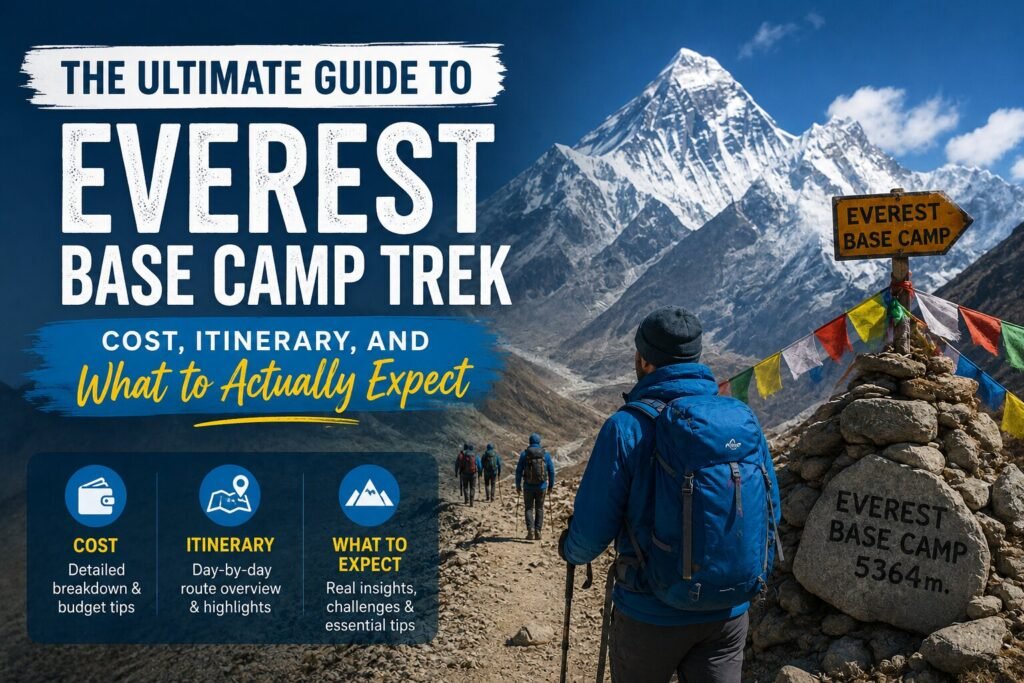
Everest Base Camp sounds like something reserved for mountaineers with oxygen tanks and a death wish. It isn’t. Thousands of regular hikers — accountants, teachers, retirees — walk to EBC every year, and most of them aren’t climbers at all. They’re just people willing to put one foot in front of the other for about two weeks. The Everest Base Camp trek doesn’t require ropes, harnesses, or ice axes. What it requires is decent fitness, a stubborn streak, and a plan that respects the altitude. Get those three things right and the rest mostly takes care of itself.
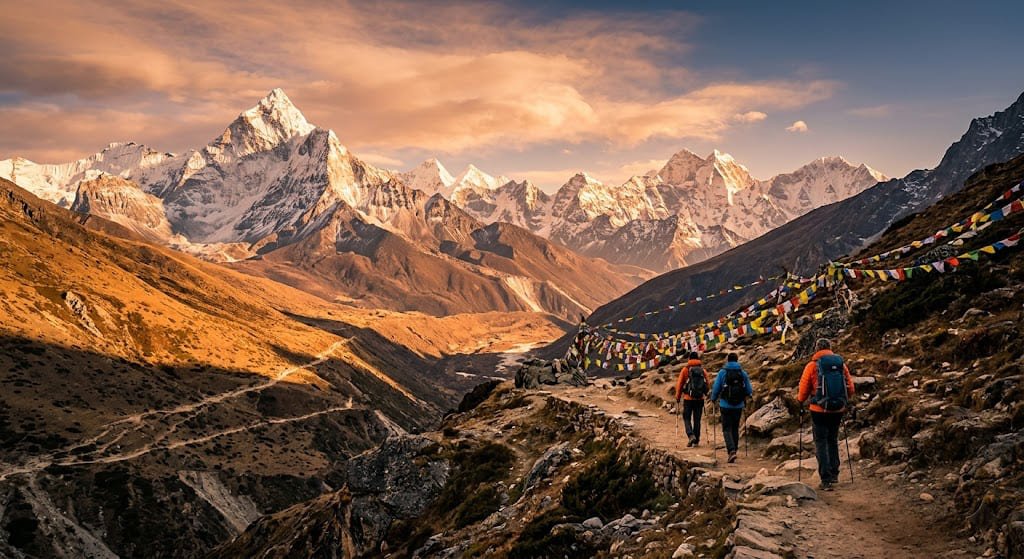
This guide covers what actually matters: what the trek costs, how the days unfold, what the altitude does to your body, and what to pack so you’re not buying a $40 fleece in Namche Bazaar at the last minute (people do this constantly, by the way).
Why the EBC Trek Hits Different
Plenty of treks have mountains. Few have this much story baked into the trail.
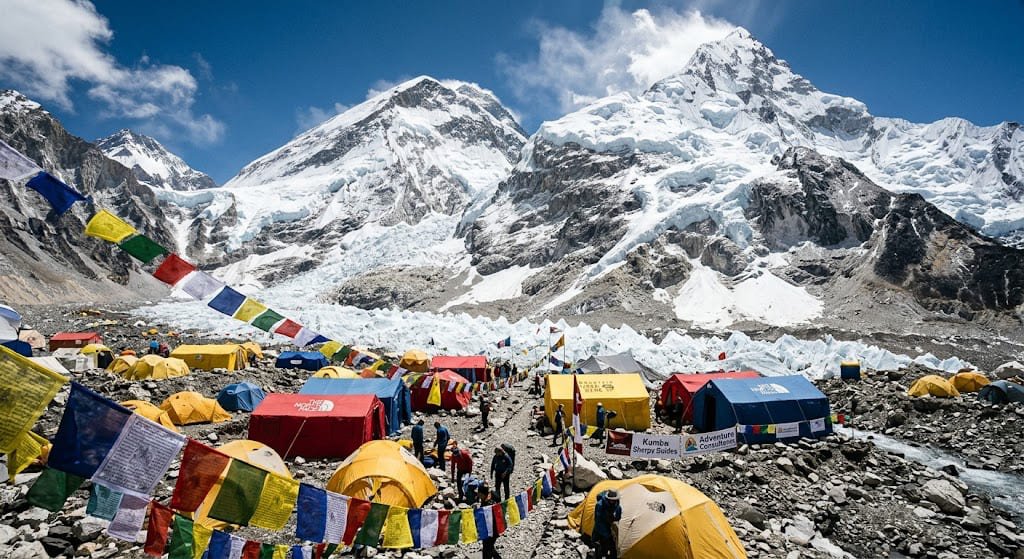
You’re walking through the Khumbu region — Sherpa homeland, the staging ground for nearly every successful Everest summit since Hillary and Norgay in 1953. Stone monasteries, prayer flags strung across suspension bridges, yak trains hauling supplies up paths too narrow for vehicles. It’s not a wilderness trek in the usual sense. There are tea houses, hot meals, and conversations with locals along the entire route.
What sets it apart from other big hikes is the combination: serious altitude, genuine cultural immersion, and a view at the end that’s been photographed a million times but somehow still gets people teary-eyed in person. The Himalayan base camp trek experience isn’t really about reaching a pile of rocks at 5,364 meters. It’s about the three weeks of villages, monasteries, and slow climbing that get you there.
Everest Base Camp Altitude and Elevation: What It Actually Feels Like
Let’s talk numbers first, because they matter more than most people expect going in.
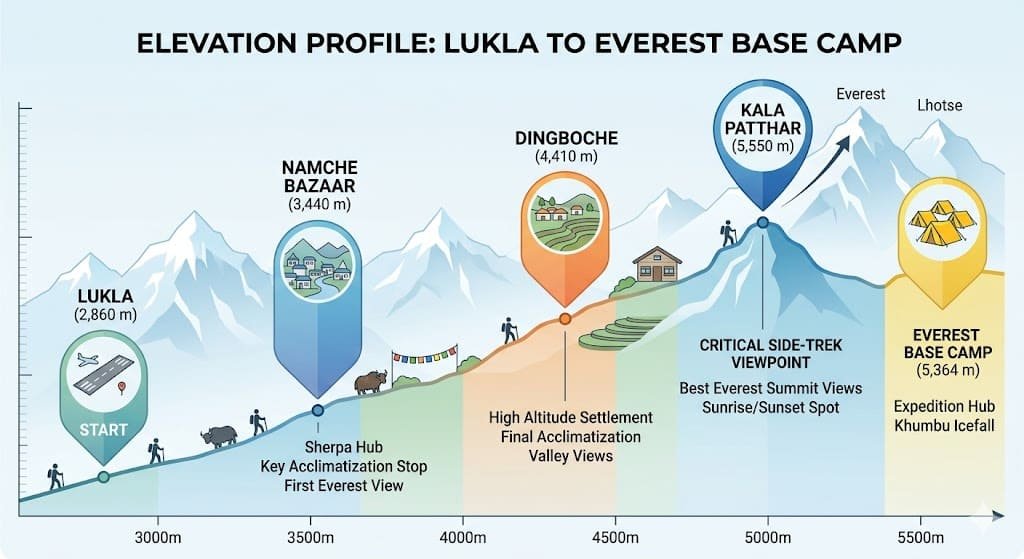
Everest Base Camp sits at 5,364 meters (17,598 feet). For comparison, that’s higher than every peak in the contiguous United States. Kala Patthar, the viewpoint most trekkers add on for the classic Everest panorama, tops out even higher at around 5,545 meters.
Here’s the part nobody tells you clearly enough: altitude sickness doesn’t care how fit you are. Marathon runners get hit with Acute Mountain Sickness (AMS) just as often as out-of-shape office workers — sometimes more, because fitness tempts people to climb faster than their bodies can adjust. Above roughly 2,500 meters, your blood oxygen saturation starts dropping, and your body needs time to compensate.
The rule that actually keeps people safe is simple to say and hard to follow when you’re excited: climb high, sleep low, and build in rest days. Most standard itineraries schedule acclimatization stops at Namche Bazaar (3,440 m) and again at Dingboche or Pheriche. Skip those days because you’re “feeling fine” and you’re gambling with something that can turn serious fast. The Himalayan Rescue Association runs an aid post in Pheriche specifically because this happens often enough to need one.
Diamox (acetazolamide) is the go-to preventative medication many trekkers use, though you’ll want to talk to a travel doctor before you go rather than figuring out dosing on the trail.
The Classic 12-Day Nepal Travel Itinerary
Most operators run some version of this route. It varies a bit by company, but the bones stay the same.
- Day 1–2: Fly Kathmandu to Lukla (2,860 m), trek to Phakding.
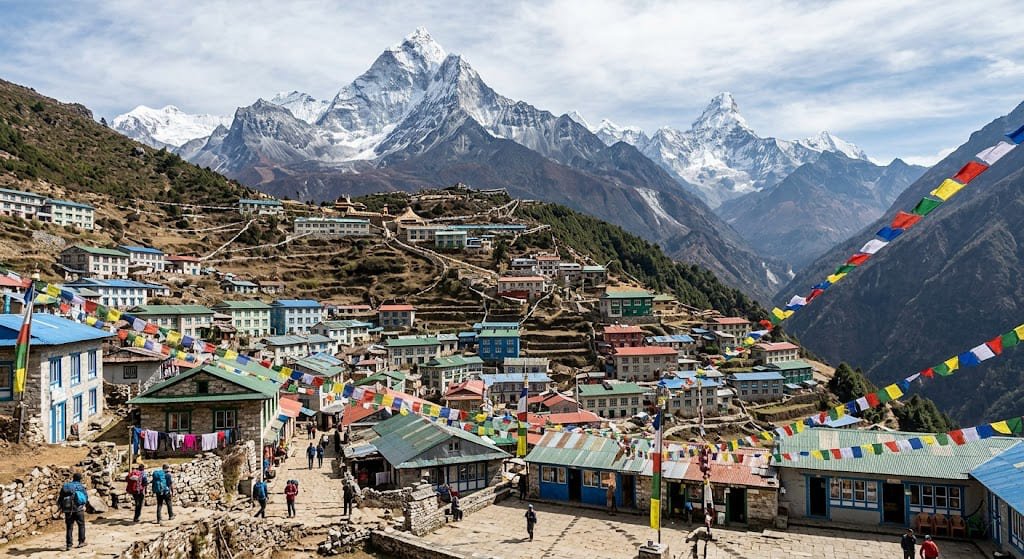
- Day 3: Trek to Namche Bazaar (3,440 m) — the unofficial capital of the Khumbu and your first real acclimatization stop. Bakeries, bars, and a genuinely surprising amount of trekking gear for sale.
- Day 4: Acclimatization day in Namche. Most people hike up to the Everest View Hotel for a coffee and the first proper look at Everest itself — worth it for the view alone, even if the coffee is overpriced.
- Day 5–6: Trek through Tengboche (home to the region’s most famous monastery) to Dingboche.
- Day 7: Second acclimatization day, usually with a short acclimatization hike up nearby ridgelines.
- Day 8–9: On to Lobuche, then Gorak Shep, the last settlement before base camp.
- Day 10: Trek to Everest Base Camp itself, then back to Gorak Shep. Most days start before sunrise.
- Day 11: Predawn climb up Kala Patthar for the iconic sunrise view of Everest’s summit, then begin the descent.
- Day 12–13: Descend back through Namche to Lukla.
- Day 14: Fly back to Kathmandu — weather permitting, which is its own adventure some seasons.
That last point is worth saying out loud: Lukla flights get cancelled or delayed constantly due to weather. Build a buffer day or two into your schedule if you can. Missing an international flight home because of a fogged-in mountain airstrip is a more common problem than people expect.
Everest Base Camp Trek Cost: What You’ll Actually Spend
This is where most blog posts get vague. Here’s the real range, depending on how you choose to go.
| Trekking Style | Typical Cost Range (USD) | What’s Usually Included |
|---|---|---|
| Fully independent (no guide/porter) | $800 – $1,200 | Permits, tea house lodging, meals, flights — you handle logistics |
| Guided trek, no porter | $1,200 – $1,800 | Above, plus a licensed guide |
| Standard group package (guide + porter) | $1,500 – $2,500 | Guide, porter, all permits, lodging, most meals, airport transfers |
| Premium/luxury package | $3,000 – $6,000+ | Better lodges, smaller groups, sometimes helicopter return |
A few costs catch people off guard. Permits alone run somewhere in the $50–$100 range combined — you’ll need the Sagarmatha National Park entry permit and a local Khumbu Pasang Lhamu Rural Municipality permit. Wi-Fi, hot showers, and battery charging cost extra at almost every tea house the higher you climb, and those small charges add up over twelve days. Budget an extra $150–$250 just for that kind of incidental spending.
Honestly, the independent route saves money but costs time and stress — sorting permits, finding porters, navigating without a fixed schedule. For a first EBC trek, most people find the mid-range guided package gets the best balance of cost and peace of mind.
Essential Gear and Logistics: Preparing for the Climb
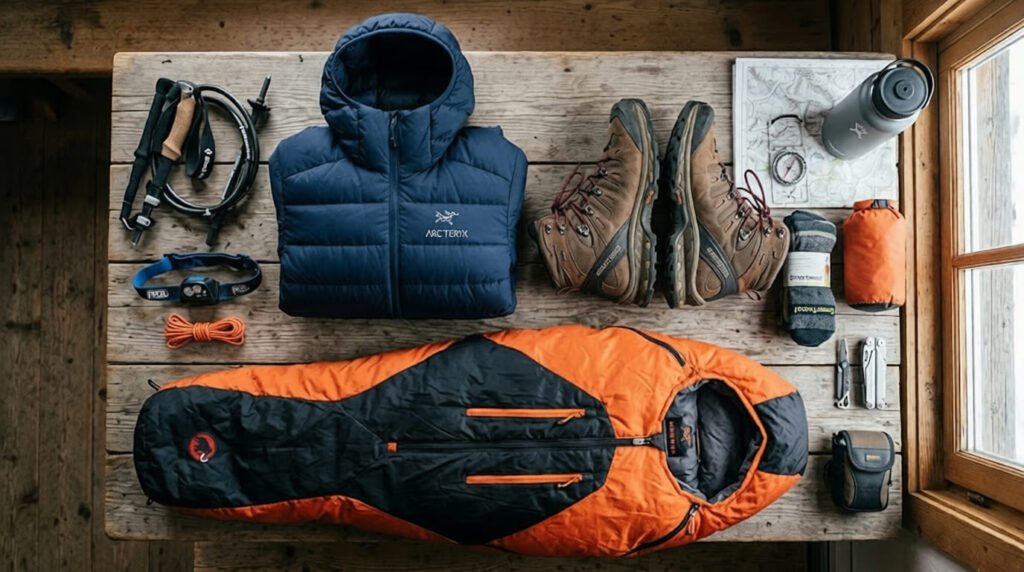
You don’t need climbing gear. You need layering done right, because temperatures swing from sweaty mid-day sun to well below freezing at night, sometimes within the same day.
The layering system that actually works: a moisture-wicking base layer, an insulating mid-layer (fleece or light down), and a windproof/waterproof outer shell. Add a heavyweight down jacket for evenings at altitude — temperatures at Gorak Shep regularly drop below -15°C overnight in peak season.
Beyond clothing, the non-negotiables are a sleeping bag rated to at least -15°C, broken-in hiking boots (never break in new boots on the trail — that’s how blisters end trips early), and a reliable headlamp for the predawn Kala Patthar climb.
On the logistics side: most nationalities can get a Nepal tourist visa on arrival at Kathmandu’s international airport — bring passport photos and USD cash, since card payment isn’t always reliable there. Travel insurance with high-altitude trekking and helicopter evacuation coverage isn’t optional in any practical sense; rescue costs at altitude run into the thousands of dollars without it.
Frequently Asked Questions
Is the Everest Base Camp trek hard for beginners? It’s demanding but achievable for beginners with reasonable fitness and proper training beforehand. The challenge is altitude and endurance over multiple days, not technical climbing skill.
Do I need a guide for the EBC trek? It’s not legally required for most routes, but a licensed guide adds real safety value, especially for altitude monitoring and navigation during bad weather. Many trekkers, especially first-timers, find it worth the cost.
What’s the best season for the Everest Base Camp trek? Pre-monsoon (March–May) and post-monsoon (late September–November) are the two main windows, offering the clearest skies and most stable weather.
How much should I budget total for the EBC trek? Including flights to Nepal, permits, a guided package, and incidentals, most travelers spend somewhere between $1,800 and $3,000 for the full trip.
Can someone with no trekking experience do EBC? Yes, with the right preparation — several months of cardio and hill training beforehand makes a significant difference. Complete beginners do successfully complete this trek every season.
Final Thoughts
The Everest Base Camp trek isn’t about being an elite athlete. It’s about respecting the altitude, planning your budget honestly, and giving yourself enough days to acclimatize properly. Get the basics right — the right gear, a sensible itinerary, and patience with your own body — and EBC is genuinely within reach for most reasonably fit travelers.
If you’re still deciding between independent trekking and a guided package, start with your budget and risk tolerance. Either way, the trail to base camp rewards anyone willing to walk it slowly.
1 thought on “The Ultimate Guide to the Everest Base Camp Trek: Cost, Itinerary, and All”
Pingback: Top Adventures in Nepal: 10 Best Thrill-Seeking Activities