So you’ve decided on Nepal. Maybe it’s Everest Base Camp, maybe it’s a slower trip through Pokhara and Chitwan, maybe you just typed “best travel agency in Nepal” into Google at 1am and now you’ve got forty tabs open. That’s normal. Nepal has thousands of registered agencies, and a good chunk of them look identical online — same stock photos, same “10% off” banners, same vague promises.
Here’s the thing: the agency you pick matters more than almost any other decision you’ll make for this trip. Get it right and someone handles your permits, your guide knows the trail like their own backyard, and if altitude sickness hits at 4,500m, there’s an actual plan. Get it wrong and you’re the group standing in a teahouse arguing about a missing meal that was supposedly “included.”
This guide walks through what to actually check — not the generic “read reviews” advice you’ve already seen, but the specific stuff that separates a solid Nepal travel agency from one that’s cutting corners.
What Makes a Travel Agency in Nepal “the Best” — Definition First
There’s no single body that hands out a “best travel agency in Nepal” trophy. What you’re really evaluating is a combination of licensing, on-ground experience, transparency, and how the agency handles things when a plan changes — because in the mountains, plans change.
Registered vs. unregistered operators
Every legitimate operator should be registered with the Nepal Tourism Board (NTB) and, for trekking specifically, affiliated with TAAN (the Trekking Agencies’ Association of Nepal). This isn’t paperwork trivia — it’s what makes your guides insured, your permits legal, and your trip enforceable if something goes wrong. You can usually find the registration number in the footer of an agency’s website or just ask them directly. If they dodge the question, that’s your answer.
Local vs. foreign-based agencies
A lot of “Nepal tour” websites you’ll find are actually booking platforms based in Europe or the US that subcontract the trip to a local operator anyway — and take a cut in the middle. Booking with a Nepal-based agency directly usually means better pricing and a guide team that actually lives near the routes they’re leading you on.
What to Check Before You Book
1. Licensing and legal registration
Ask for the company registration number and, if you’re trekking above 4,000m, confirm their TAAN membership. This takes two minutes and rules out a huge chunk of shady operators immediately.
2. Reviews — but read them the right way
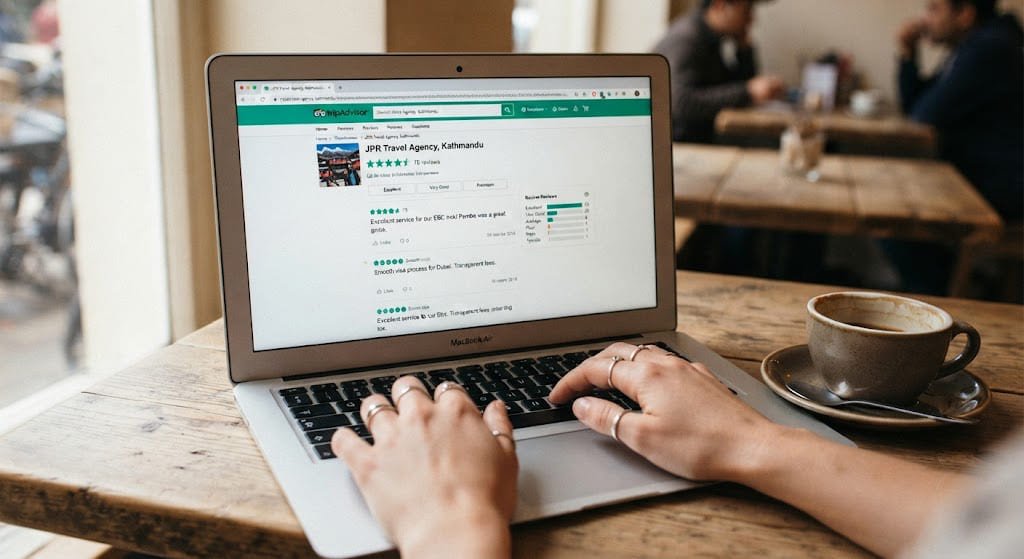
Don’t stop at the testimonials on the agency’s own homepage. Nobody’s publishing their bad reviews there. Cross-check on Google Reviews and TripAdvisor instead, and actually read the 3-star reviews, not just the 5-star ones — that’s where you find out what actually goes wrong on a trip, not just what goes right.
3. What’s actually included in the price
This is where most disputes start. Say two agencies quote Everest Base Camp — one at $1,100, one at $1,450. The cheaper one often turns out to exclude the TIMS card, the Sagarmatha National Park permit, or the Lukla flight taxes, which together can run close to $100–150 on their own. Add a porter you weren’t told you’d need to tip separately, and that “cheap” trip isn’t cheap anymore.
Ask for a full breakdown before you pay anything. A transparent agency lists it without being asked twice: accommodation, meals, guide fees, permits, transport — itemized, in writing.
If you’re planning something specific like the Everest Base Camp trek, the Annapurna Circuit, or a quieter route like Manaslu Circuit or Langtang Valley, the price swing between “everything included” and “guide only” packages can be significant — make sure you’re comparing like for like.
4. Safety protocols and emergency support
At altitude, things move fast. A trekker who’s fine at breakfast in Dingboche can be showing signs of HAPE by dinner. Ask directly: do guides carry a pulse oximeter and check it daily, is there a spare bottle of oxygen at higher camps, and what’s the actual evacuation plan — helicopter insurance, nearest clinic, who makes the call to descend.
An agency that answers without hesitating has dealt with this before. One that shrugs it off hasn’t — no matter how good the itinerary photos look.
5. Communication before you’ve even paid
How an agency treats you during the inquiry stage is usually how they’ll treat you on the ground. Slow, copy-paste replies before you’ve booked rarely turn into attentive service once you have. A quick way to test this: send a slightly unusual question — a dietary restriction, a request to add an extra rest day — and see how specific the answer is.
6. Range of services
Trekking-only agencies are fine if that’s all you need, but if your trip involves flights, hotels, or a visa, it’s often simpler to work with an agency that handles all of it — domestic flights, international tickets, hotel bookings, and visa services — instead of juggling three separate bookings that don’t talk to each other.
7. Group size and customization
A 16-person group on a narrow mountain trail is a different experience than a private group of four. If you want flexibility on pace, ask specifically about private departures versus fixed join-in groups, and how many trekkers per guide the agency typically runs.
8. Years in operation and local expertise
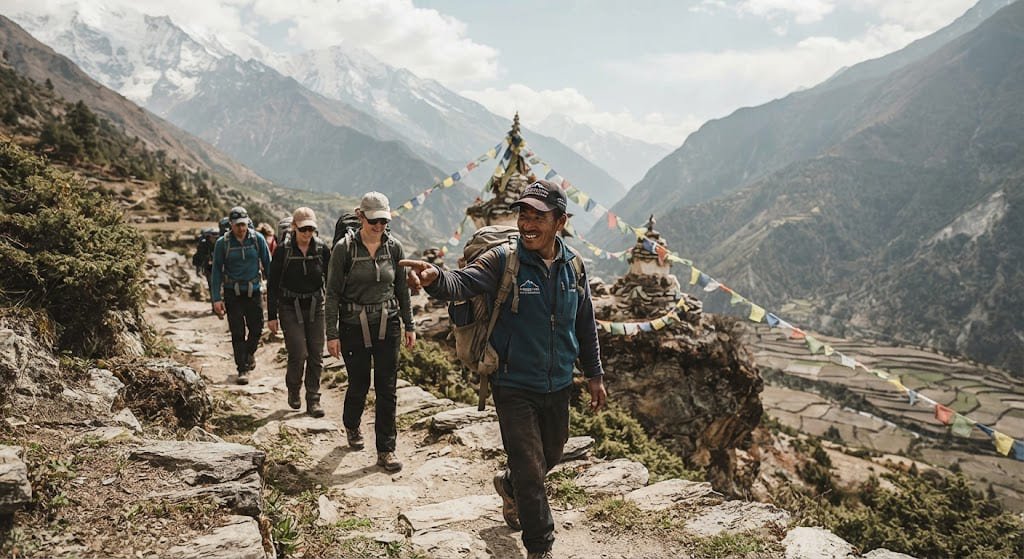
Experience isn’t everything, but a company that’s run treks through multiple seasons has usually already made — and fixed — the mistakes a newer outfit hasn’t hit yet. Ask how long they’ve operated in the specific region you’re heading to, not just “how long has the company existed.”
9. Cancellation and rescheduling policy
Weather in the Himalayas doesn’t care about your itinerary. Flights to Lukla get delayed constantly. Ask what happens if a flight is cancelled, if you need to reschedule, or if you have to cut a trek short. A written policy — not a verbal “don’t worry about it” — is what you want here.
Local Agency or International Booking Platform?
My honest take: unless you’re juggling five countries in one trip and just want a single app to manage it all, book local. International platforms add a margin for doing nothing you couldn’t do yourself, and they’re not the ones who’ll pick up the phone at 6am if your Lukla flight gets cancelled for the third day running.
A locally based Nepal travel agency knows which teahouse still has rooms during peak season, which trail sections wash out after monsoon, and who to call when a permit office is closed for a random holiday nobody warned you about. That’s not something a call center in another time zone can replicate.
If your trip extends beyond Nepal — say a Bangkok flight or onward travel to Thailand, Dubai, or Bali — ask whether the agency handles that leg directly or just says yes and sorts it out later by emailing a third party.
Common Mistakes People Make When Choosing a Nepal Travel Agency
Most people default to the cheapest quote or the fastest reply. I’d trust neither on its own. The cheapest quote is cheap for a reason, and you’ll usually meet that reason on day three of the trek, in cash. A fast reply only means something if it actually answers what you asked — “Yes we can do that!” to a specific question about oxygen supply is not an answer, it’s enthusiasm.
Website quality is the other trap. It correlates with marketing budget, not guide competence. Some of the most reliable operators running the Manaslu and Langtang routes still have websites that look like they haven’t been touched since 2015. Judge the answers, not the layout.
Quick Checklist Before You Book
- Registered with NTB, and TAAN if trekking
- Reviews checked on an independent platform, not just the agency’s site
- Full price breakdown in writing
- Clear altitude sickness and emergency evacuation plan
- Responsive, specific communication before payment
- Cancellation/rescheduling policy in writing
- Group size and guide-to-trekker ratio disclosed upfront
If an agency checks most of these boxes, you’re in reasonably safe hands. If you want to see how one Kathmandu-based agency handles all of this in practice — packages, permits, guides, and add-on services like flights and hotels — you can browse current tour and trek packages here, or just get in touch with your questions and see how the reply lands.
FAQ
What is the best travel agency in Nepal?
As per many of our customers, we at JPR Travel Agency provide the best customer service through our unmatched affordability, fast turnaround times, and reliable support—always ensuring your travel and tour needs are handled with care and efficiency.
How do I know if a travel agency in Nepal is licensed? Ask directly for their NTB registration number and, for trekking, their TAAN membership. Legitimate agencies list this on their website or provide it immediately when asked.
Is it cheaper to book directly with a local agency in Nepal? Booking directly from their website and visiting offline is generally cheaper. International booking platforms often subcontract the actual trip to a local operator and add a margin on top, whereas booking directly cuts out that markup.
What should be included in a Nepal tour package price? At minimum: accommodation, meals as specified, guide fees, required permits, and transport. Ask for an itemized breakdown before booking so nothing gets added later.
How far in advance should I book a trek in Nepal? For popular routes and peak seasons (spring and autumn), 4–8 weeks ahead is reasonable, especially if you need specific flight dates like Lukla flights. For custom or off-season trips, agencies can often accommodate shorter notice.