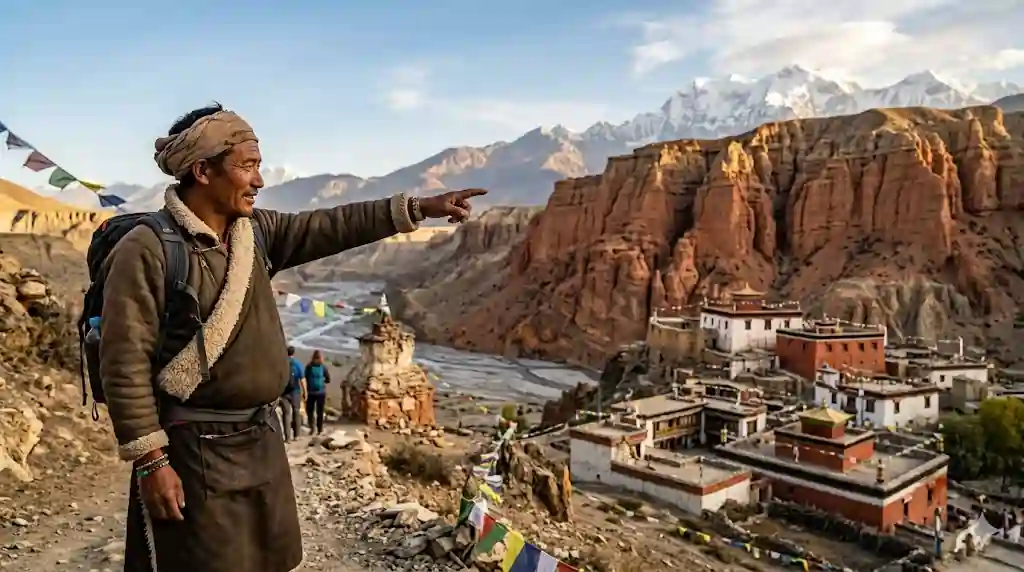
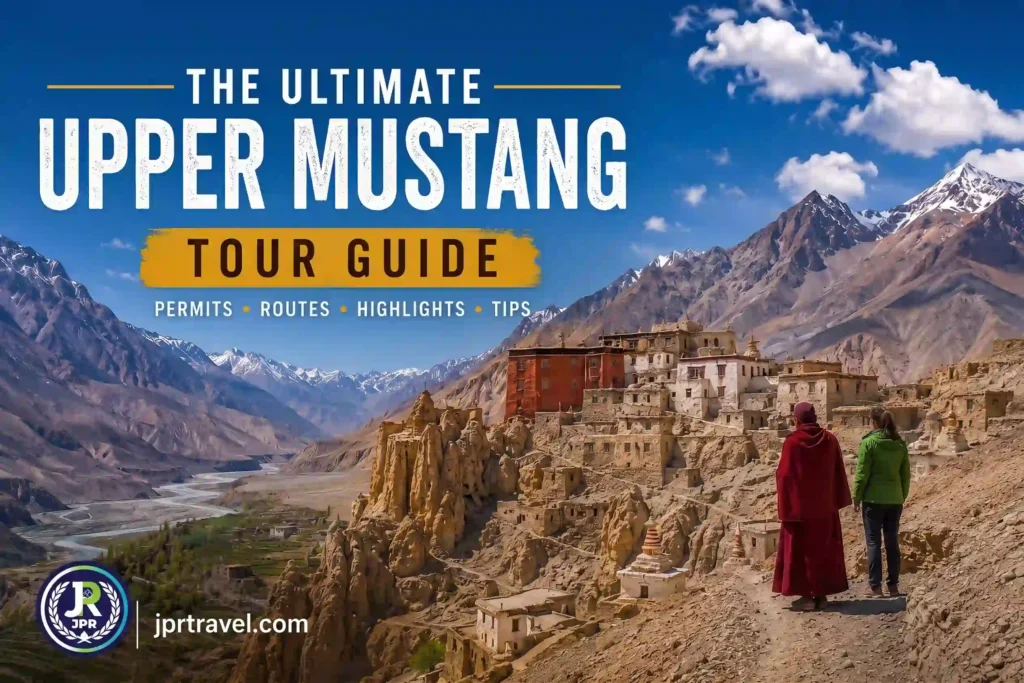
Tucked away in the deep rain shadow of the mighty Himalayas lies a land entirely frozen in time. Known historically as the legendary Kingdom of Lo, Upper Mustang offers an extraordinary, otherworldly landscape characterized by wind-sculpted clay cliffs, ancient man-made sky caves, and a deeply preserved, vibrant Tibetan Buddhist culture. If you are currently dreaming of or planning a journey to this remote Himalayan sanctuary, this comprehensive Upper Mustang Tour guide serves as your ultimate, step-by-step blueprint for navigating one of the world’s very last untouched geographic frontiers.
Unlike standard trekking destinations across Nepal, venturing into the forbidden realm of Upper Mustang requires meticulous preparation, careful legal compliance, and strategic planning. From securing highly restricted government area permits to understanding complex, high-altitude logistics, having access to the right information beforehand is the definitive difference between an average, stressful trip and a seamless, life-changing expedition.
Why Hiring a Licensed Upper Mustang Tour Guide is Essential
Traveling through the rugged terrain of Upper Mustang is entirely different from casual backpacking through popular routes like the Annapurna Circuit or the Everest region. The Government of Nepal officially classifies this territory as a strictly regulated, restricted area. This classification was intentionally put in place to preserve the region’s fragile high-desert environment, protect scarce local resources, and shield its centuries-old cultural heritage from the negative impacts of mass, unregulated tourism.
Because of these strict conservation laws, solo trekking is 100% prohibited anywhere within the upper boundaries. To legally cross the checkpoint, you must comply with two non-negotiable rules:
You must travel alongside a legally registered, licensed Nepalese guide.
You must be part of a group that consists of a minimum of two foreign travelers.
LEGAL REQUIREMENT: Solo travel is forbidden in Upper Mustang.
You must book via a registered agency with a licensed guide and at least two permits issued together.An experienced, certified Upper Mustang Tour guide acts as much more than just a person showing you which path to walk. They serve as your vital cultural bridge to a world that operates on ancient traditions. They unlock the deep historical secrets of centuries-old monasteries, translate distinct local dialects that differ significantly from standard Nepali, and use their established relationships to secure entry into restricted chapels and hidden rooms that are usually locked to outsiders.
Furthermore, navigating a harsh, arid, high-altitude desert and managing daily logistics in incredibly remote villages can become overwhelming very quickly. A professional guide handles your emergency safety protocols, closely monitors sudden high-altitude weather shifts, and coordinates your daily accommodations ahead of time. This ensures your safety, comfort, and peace of mind throughout the entire high-altitude journey.

Key Highlights of the Upper Mustang Journey
The physical landscape of Upper Mustang transitions dramatically as you move north, leaving behind the lush green alpine valleys of lower Mustang and entering a stark, mesmerizing, wind-swept desert that strongly resembles the Tibetan Plateau. When choosing a premium, comprehensive upper mustang tour package, these are the absolute, non-negotiable highlights you will discover along the route:
Kagbeni Village: The Medieval Gateway to the North
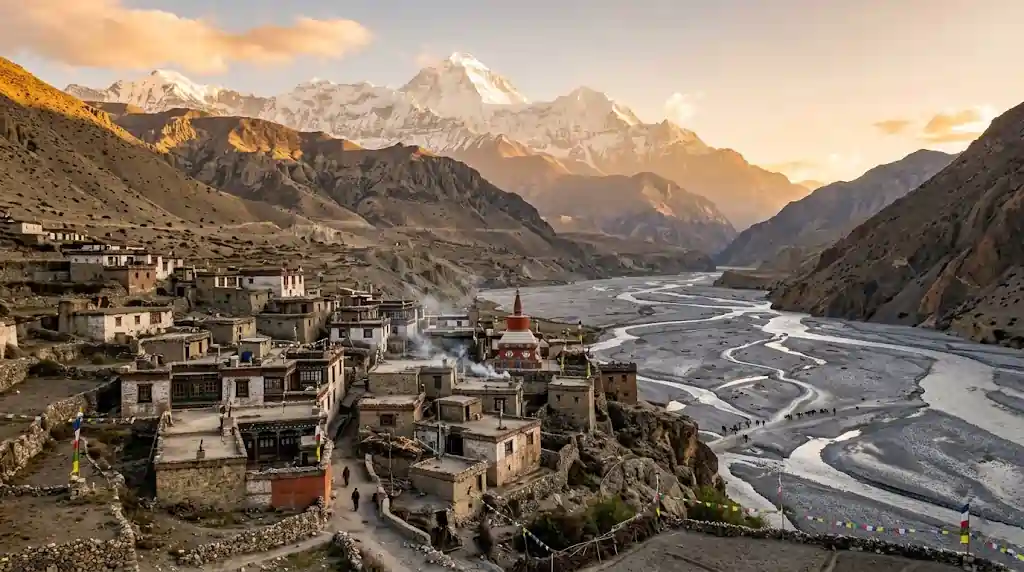
Your journey into the restricted zone officially begins the exact moment you cross the military checkpoint right past the ancient Kagbeni village. Situated strategically at the confluence of the roaring Kali Gandaki and Jhong rivers, this medieval mud-brick town genuinely feels like a living, breathing museum from a bygone era.
Featuring a maze of incredibly narrow alleyways, dark tunnels built for wind protection, traditional earthen mud-brick houses, and the towering, bright red fortress of the Kag Chode Thupten Samphel Ling Monastery, Kagbeni serves as the crucial geographic transition point. It is exactly where the green, accessible lower Mustang valley ends and the forbidden, dramatic landscapes of Upper Mustang begin.
Alternative Travel Tip: If you want to experience the rich culture and striking landscapes of this transition zone without paying the premium price tag of a restricted area permit, opting for a shorter Muktinath & Lower Mustang Tour Package is an incredible, budget-friendly alternative that still offers profound spiritual and scenic rewards.
Lo Manthang: The Mythical Walled Capital
Deep at the heart of this restricted region lies Lo Manthang, the historic, legendary capital of the ancient Kingdom of Lo. Completely surrounded by a massive, continuous earthen defensive wall originally constructed in the early 15th century, this isolated settlement remains the proud home of the local King’s palace.
Lo Manthang houses three major, centuries-old active monasteries that stand as pillars of Tibetan Buddhism:
Jampa Lhakhang: The oldest monastery, famous for its massive, three-story clay statue of Maitreya Buddha and intricate wall murals.
Thubchen Lhakhang: A grand assembly hall featuring soaring wooden pillars and majestic, gold-illuminated frescoes.
Chodey Gompa: The vibrant center of local monastic life and the primary host of the world-famous annual Tiji Festival.
Walking through the imposing main gates of Lo Manthang feels less like a standard vacation and much more like stepping directly into a living history book of medieval Tibet.
The Mysterious, Ancient Sky Caves
Carved directly into the vertical faces of sheer, crumbling clay cliffs throughout Upper Mustang are thousands of mysterious, man-made sky caves. Perched hundreds of feet above the valley floors, some of these multi-story cave complexes are estimated by historians to be well over 2,000 years old.
Over the last few decades, international teams of archaeologists and explorers have uncovered astonishing secrets hidden deep inside these inaccessible chambers, including:
Perfectly mummified human remains dating back millennia.
Invaluable, ancient Buddhist manuscripts written on handmade paper.
Exquisite, well-preserved devotional paintings hidden away from sunlight.
To this day, these structures leave historians and anthropologists deeply captivated, as they piece together whether their original purpose was for defensive hiding spots, burial chambers, or sacred spaces for isolated meditation.

Choosing the Right Tour Package from Nepal
When organizing a high-altitude expedition of this magnitude, selecting a reputable, fully authorized agency and a highly tailored tour package from Nepal is absolutely vital to your safety and trip success. Most premium, fully guided Nepal vacation packages begin with your arrival in Kathmandu or Pokhara, and they can be completely customized based on your physical fitness, timeline, and preferred mode of transportation.
The Modern Dilemma: Trekking vs. Jeep Safaris
Historically, the only way to explore this region was via a strenuous multi-week trek. However, the recent construction of a dirt road network has opened up incredible options:
The Classic Trek: Ideal for purists who want to walk the ancient trade routes, cross high passes on foot, and slowly absorb the silence of the desert.
The 4×4 Jeep Safari: Perfect for travelers who want to skip the intense physical strain, minimize travel days, or possess limited mobility, allowing them to glide over the rugged terrain in comfort.
What a Standard, High-Quality Package Includes
| Service Type | Standard Inclusion | Practical Notes & Logistics |
| Permits | Restricted Area Permit ($500 USD for 10 days) & ACAP Permit | Must be arranged strictly through registered Nepalese travel agencies. |
| Transport | Private 4×4 Jeep, domestic flights, or local transfers | Highly recommended due to the incredibly dusty, bumpy, and rugged mountain roads. |
| Accommodation | Traditional mountain teahouses and local homestays | Basic, clean, and unheated rooms offering authentic, warm Himalayan hospitality. |
| Guiding | Licensed, English-speaking Upper Mustang Tour guide | Strictly mandatory by Nepalese law to pass regional checkpoints. |
By booking a comprehensive, high-quality itinerary with a verified team, you ensure that all complex permit logistics, government paperwork, and seasonal verifications are handled flawlessly well before you even land in the country. This saves you from experiencing frustrating, bureaucratic administrative delays in government offices in Kathmandu.
Curious about how this high-altitude desert compares to classic, snowy alpine routes? If you want to experience the stark contrast of walking among towering, snow-capped giants, explore our legendary Everest Base Camp Trekking Package to view a completely different, iconic side of Nepal’s diverse geography.
Practical Travel Tips for Your Upper Mustang Adventure
To maximize your enjoyment and avoid common pitfalls along the trail, keep these practical, expert-vetted travel tips in your back pocket:
Pack Professional Windproof Gear: The massive Kali Gandaki gorge behaves as a giant, natural wind tunnel. Every single day, incredibly powerful, dust-laden winds begin howling from mid-morning and last until the sun sets. Wearing windproof jackets, high-quality buff scarves to protect your throat, and wrap-around sunglasses is absolutely mandatory to prevent windburn and dust inhalation.
Understanding the Best Time to Visit: Unlike the vast majority of Nepal, Upper Mustang lies completely within a geographical rain shadow created by the Annapurna and Dhaulagiri mountain ranges. This makes it an incredibly unique destination that you can comfortably visit during the traditional summer monsoon season (June to August) when the rest of Nepal experiences heavy rains. It is also spectacular during the peak spring (March to May) and autumn (September to November) seasons.
Deeply Respect Local Cultural Customs: You are walking through deeply sacred spaces. Always walk clockwise around Chortens (stone stupas), prayer flags, and Mani stone walls. Furthermore, always show respect by asking for explicit permission before taking photographs of local residents, young monks, or the ancient, delicate interiors of monastery chapels.
Ready to Journey Into the Forbidden Kingdom?
Upper Mustang is far more than just another destination to cross off your travel bucket list; it is a profound, meditative journey into a beautifully preserved, ancient way of life that very few modern travelers ever get the privilege to witness. With its jaw-dropping desert canyon landscapes, deep-rooted spiritual traditions, and enigmatic history, it promises an unforgettable adventure that will resonate with you for the rest of your life.
If you are ready to begin planning your custom daily itinerary, secure your restricted government permits, and match with an elite, certified local guide, explore our wide range of expert travel services and contact us directly today. Let our team handle the logistics while you prepare to embark on the ultimate, tailor-made Himalayan expedition of a lifetime.
Frequently Asked Questions: Upper Mustang Logistics & Planning
To help you seamlessly prepare for your journey, we have compiled the ultimate, expert-verified answers to the most common questions travelers ask when planning an Upper Mustang Tour guide blueprint.
How much does an Upper Mustang permit cost, and can I apply solo?
By Nepalese law, you cannot apply for this permit as a solo traveler, and you cannot apply for it independently. It must be processed through a legally registered Nepalese travel agency, and it requires a minimum group size of two travelers plus a licensed local guide. Additionally, you will need the Annapurna Conservation Area Project (ACAP) permit, which is roughly $30 USD (3,000 NPR).
What is the best month to book an Upper Mustang tour package?
Unlike most alpine treks in Nepal, the best time to visit Upper Mustang spans from March to November. Because the region sits entirely within the rain shadow of the Dhaulagiri and Annapurna massifs, it receives almost no rain.
Monsoon Season (June to August): While the rest of Nepal experiences heavy downpours and mudslides, Upper Mustang enjoys dry, clear skies, making it the premier destination for a summer tour package from Nepal.
Spring (March to May): Excellent weather, beautiful flora, and the time of the vibrant Tiji Festival in Lo Manthang.
Autumn (September to November): Crystal clear skies and optimal mountain visibility, though temperatures drop significantly as winter approaches.
Can I do an Upper Mustang jeep tour, or is it strictly a trekking route?
You can absolutely do a complete 4×4 jeep safari tour. The expansion of the local road network means you can now drive all the way from Jomsom to the walled capital of Lo Manthang and even up to the Korala Border (the border crossing with Tibet).
A jeep tour is highly popular for travelers who want to skip the intense physical strain of high-altitude trekking or those with limited time. However, many adventurers still prefer a classic walking trek to truly soak in the silence of the clay cliffs and ancient trail routes.
How difficult is the trek, and what is the maximum elevation?
The Upper Mustang trek is considered moderately challenging. While it does not climb as high as the Everest Base Camp Trekking Package, which reaches over 5,300 meters, it still requires strong cardiovascular fitness.
Average Walking Elevation: Most days are spent walking between 3,000 meters (9,840 feet) and 3,800 meters (12,460 feet).
Maximum Elevation: The highest point reached on a standard trek or driving route is typically around 3,850 meters (12,630 feet) at local mountain passes, or up to 4,600 meters if you take a day excursion to the Korala Border.
The Real Challenge: The difficulty does not stem from extreme altitude sickness, but rather from the relentless afternoon winds, dry air, and intense dust blowing through the canyons.
What is the accommodation and food like in the Kingdom of Lo?
Accommodations consist of traditional mountain teahouses and local homestays. While they are structurally simple and rooms are generally unheated, they are clean, comfortable, and deeply hospitable. Most rooms feature twin beds with thick blankets, though bringing a high-quality sleeping bag is always recommended for colder nights.
The food menu is surprisingly varied but leans toward hearty, energy-rich meals. You can expect:
Local Tibetan Staples: Traditional Tsampa (roasted barley flour), Tibetan bread, Thukpa (noodle soup), and hearty steamed momos.
Standard Trekking Fare: The classic, life-saving Nepalese Dal Bhat (rice, lentil soup, and vegetable curry), eggs, pancakes, and pasta dishes.
Beverages: Hot ginger tea, garlic soup (excellent for altitude adaptation), and traditional salty Tibetan butter tea.
Can I visit Kagbeni Village and Lower Mustang on the same trip?
Yes, absolutely! Kagbeni village is the physical and legal gateway where lower Mustang ends and the restricted Upper Mustang region officially begins. Every itinerary naturally spends time exploring Kagbeni’s ancient mud-brick alleyways and monasteries before crossing the checkpoint.
If you find that the $500 USD restricted area permit exceeds your budget, you can easily pivot to a comprehensive Muktinath & Lower Mustang Tour Package. This allows you to experience the dramatic transition landscapes, medieval architecture, and sacred temple sites of Jomsom, Marpha, Kagbeni, and Muktinath without needing the restricted zone clearance.
Explore our complete list of specialized travel services, browse our premium Nepal vacation packages, or contact us directly today to start building your custom dream expedition into the Forbidden Kingdom!