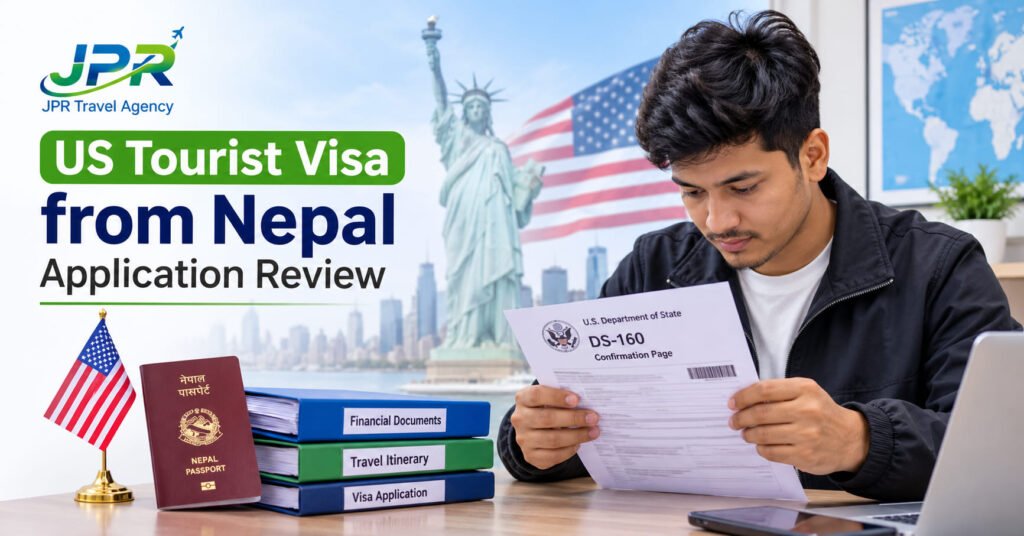
Walking out of the US Embassy in Maharajgunj holding your passport and a standard refusal slip is a disheartening experience. After spending weeks gathering paperwork, paying the fee, and waiting for an interview slot, a two-minute conversation at the consular window can end your travel plans before they begin.
However, a refusal on a US tourist visa from Nepal does not permanently bar you from visiting the United States.Thousands of Nepali applicants secure a USA visit visa on a subsequent attempt after addressing the weaknesses in their initial filing. The key to turning a refusal into a strong reapplication for an America tourist visa lies in understanding the legal basis for the decision, auditing your previous DS-160 form, and presenting clear evidence of your ties to Nepal.
Understanding US Tourist Visa Rejection in Nepal
Visitors traveling to the United States temporarily apply for a US visitor visa B1/B2, which combines two distinct nonimmigrant categories. The B-1 business visa covers short-term commercial activities such as attending professional conferences, consulting with business associates, or negotiating contracts. The B-2 tourist visa covers recreational travel, holidays, visiting family or friends, and medical treatment.
At the US Embassy in Kathmandu, consular officers evaluate each US visa application process from Nepal on its individual merits. Most refusals occur as a US visa refusal under Section 214(b) of the US Immigration and Nationality Act (INA). Under Section 214(b), US law requires consular officers to presume that every nonimmigrant applicant intends to immigrate permanently until the applicant proves otherwise. A 214(b) refusal means the officer was not convinced that your social, economic, and professional ties to Nepal would compel you to return home after a temporary stay.
7 Common Reasons Why US Tourist Visas Get Rejected in Nepal
Evaluating the primary US tourist visa rejection reasons in Nepal helps applicants pinpoint where their previous case fell short. Every US visa rejection Nepal case stems from how an applicant’s profile, form, and interview responses align.
1. Weak Evidence of Ties to Nepal
- Consular concern: Without strong local commitments, an applicant appears more likely to overstay in the United States.Travel
- Nepali example: A recent graduate working remotely with no dependent family members or long-term career commitments in Kathmandu.
- Next steps: Build a verifiable career track record, long-term employment, or documented local responsibilities before reapplying.
2. Unclear Travel Purpose or Inconsistent Itinerary
- Consular concern: Vague travel plans suggest the stated tourism purpose may not be genuine.
- Nepali example: Requesting a four-week holiday in New York without knowing which landmarks to visit or where to stay.
- Next steps: Outline a realistic itinerary matching your budget and review essential things to know before travelling abroad.
3. Financial Circumstances That Do Not Support the Trip
- Consular concern: Inadequate income or unverified funds raise doubts about how the trip will be paid for.
- Nepali example: Depositing a large, unexplained lump sum into a bank account two weeks before the embassy interview.
- Next steps: Maintain consistent bank statements showing regular salary or business revenue rather than relying on sudden deposits.
4. Inconsistent Information in the DS-160 and Interview
- Consular concern: Contradictions between your DS-160 form and spoken answers undermine your credibility.
- Nepali example: Stating a monthly income of NPR 80,000 during the interview when a third-party typist entered NPR 150,000 on the form.
- Next steps: Review every line of your DS-160 personally before electronic signature to eliminate US visa application mistakes.
5. Inability to Explain Employment or Business Circumstances
- Consular concern: Applicants who cannot clearly describe their daily work appear to have weak professional anchors.
- Nepali example: A registered business owner in Pokhara who cannot explain their company’s annual turnover or daily operations.
- Next steps: Be ready to articulate your exact role, income, tax compliance, and why your physical presence in Nepal is required.
6. Previous Immigration Violations or Travel History Concerns
- Consular concern: Past overstays or unusual travel patterns signal a risk of non-compliance with US visa terms.
- Nepali example: Spending five months in the US on a previous visit after originally telling the officer you would stay for two weeks.
- Next steps: Address prior long stays honestly and build a compliant travel record using a reliable tourist visa application guide from Nepal.
7. Unclear, Incomplete, or Misleading Information
- Consular concern: Omitting facts or presenting unverifiable claims can lead to refusal or permanent inadmissibility.
- Nepali example: Failing to declare a sibling living in Texas on the DS-160 out of fear that family in the US hurts approval odds.
- Next steps: Disclose all family relationships, prior refusals, and background details transparently on your form and at the window.
No single document, bank balance, travel history, or property deed guarantees approval. Consular officers assess your overall credibility and life circumstances as a complete picture.
How to Fix Your US Tourist Visa Application After Rejection
Understanding how to reapply for US tourist visa after rejection starts with patience and honest self-assessment.Reapplying immediately with the exact same profile and answers rarely changes the decision. Consider these practical steps on how to increase US visa approval chances on a future attempt:
- Audit your refusal: Confirm whether your slip cites Section 214(b) or another provision of US immigration law.
- Wait for real change: Reapply when your job stability, income, or family responsibilities have demonstrably strengthened.
- Correct DS-160 errors: Complete your new DS-160 thoroughly, ensuring job titles, work history, and income figures are accurate.
- Design a realistic trip: Plan a duration that aligns with your approved work leave, consulting a trusted travel agency in Nepal for practical routing.
- Align your narrative: Practice explaining your economic and social commitments in Nepal concisely and truthfully.
Documents to Prepare for a US Tourist Visa from Nepal
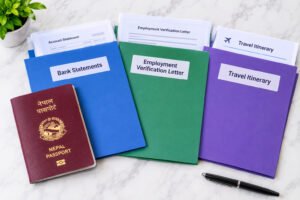 While interviews at the US Embassy focus primarily on your DS-160 and spoken conversation, organizing the documents required for US tourist visa verification keeps you prepared if an officer requests proof.
| Document Category | Required and Supporting Items |
|---|---|
| Mandatory Embassy Items | Valid passport, DS-160 confirmation page, appointment letter, MRV fee receipt, US visa photo |
| Employment and Business | Employment verification letter, approved leave letter, company registration, PAN/VAT, tax clearance |
| Financial Records | Six-month bank statement, salary slips, personal income tax returns, sponsor affidavit if applicable |
| Travel and Host Details | Day-by-day travel plan, host invitation letter, copy of US host’s legal status if visiting relatives |
Supporting documents never substitute for statutory visa eligibility, and officers are not required to review paperwork during a brief interview. Always follow current official embassy instructions and consider professional international tourist visa services to organize your file properly.
How to Prepare for Your Next US Visa Interview in Kathmandu
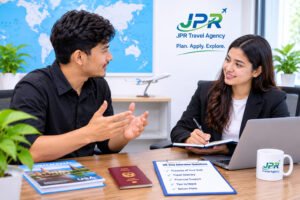 Effective US visa interview preparation focuses on clarity and honesty rather than rehearsed scripts. Keep your answers brief, match your DS-160 data, and clearly state your travel purpose, funding, and reasons for returning home. Review these common US visa interview questions in Nepal before your appointment:
- What is the purpose of your visit to the United States? State your specific reason—such as a two-week sightseeing holiday or attending a sibling’s graduation—along with the cities you will visit.
- How long will you stay, and why are you traveling now? Give an exact duration that matches your approved office leave or business off-season.
- What do you do in Nepal? Summarize your job title, years of experience, monthly income, and who handles your duties during your absence.
- Have you been refused a US visa before, and what has changed? Acknowledge the prior refusal date honestly and highlight new facts or career advancements since your last interview.
Can You Reapply After a US Tourist Visa Rejection?
Under US Department of State rules, there is no mandatory waiting period after a Section 214(b) refusal. Because each decision applies to that specific application and cannot be appealed, you may reapply whenever you are ready by submitting a new Form DS-160, paying the non-refundable USD 185 application fee again, and booking a new interview slot.
However, submitting a new application without meaningful changes in your personal or professional life usually leads to another refusal. Additionally, if your refusal involved Section 221(g) administrative processing or a Section 212(a) inadmissibility finding, follow the specific legal instructions on your refusal notice before taking further action.
How JPR Travel Can Help With Your US Visa Preparation
Preparing a thorough reapplication requires attention to detail. While no agency or consultant can influence US Embassy decisions, bypass official rules, or guarantee visa approval, JPR Travel provides ethical guidance to help Nepali travelers present their strongest genuine case:
- Application review: Auditing your DS-160 details to prevent accidental omissions or inconsistencies.
- Document organization: Structuring your financial, employment, and travel records clearly.
- Interview coaching: Conducting realistic mock sessions so you communicate your ties with confidence.
- Travel logistics: Providing comprehensive global visa assistance and international flight booking services once your visa is issued.
If you want structured guidance before your next embassy appointment, explore our visit visa consultancy in Nepal to speak with our travel advisors.
Final Thoughts
Securing a US tourist visa from Nepal after a refusal comes down to honest self-evaluation, accurate DS-160 reporting,realistic travel plans, and clear communication during your Kathmandu interview. Whether you are planning a family visit on a USA visit visa or a vacation on an America tourist visa, take time to strengthen your local ties and prepare thoughtfully before scheduling your next appointment.
Frequently Asked Questions (FAQs)
1. Why do US tourist visas get rejected in Nepal?Most US B1/B2 visitor visas in Nepal are refused under Section 214(b) of the Immigration and Nationality Act because the applicant did not sufficiently demonstrate strong social, familial, or economic ties to Nepal or a clear, credible temporary travel purpose.
2. Can I apply again after my US visa is rejected? Yes. A refusal under Section 214(b) applies only to that specific application and is not a permanent ban. You can submit a new DS-160 form, pay the visa application fee again, and schedule a new interview at the US Embassy in Kathmandu.
3. How long should I wait before reapplying for a US tourist visa?There is no mandatory waiting period after a 214(b) refusal. However, the US Department of State advises waiting until you can show significant changes in your personal,professional, or financial circumstances, or present relevant facts omitted from your previous application.
4. Does having a large bank balance guarantee a US tourist visa? No. Consular officers evaluate your overall profile, including steady income, career stability, travel purpose, and family commitments in Nepal. Large, unexplained lump-sum deposits made shortly before an interview can actually raise doubts about the authenticity of your finances.
5. Is a previous US visa rejection a problem for future applications? A prior Section 214(b) refusal does not automatically disqualify you from future approval, provided you disclose the refusal honestly on your new DS-160 and demonstrate how your circumstances or application accuracy have improved since your last interview.
6. What documents should Nepali citizens prepare for a US tourist visa?Mandatory items include a valid Nepali passport, DS-160 confirmation page, appointment confirmation, MRV fee receipt, and compliant photograph. Helpful supporting documents include employment letters, tax records, consistent bank statements, and a realistic travel itinerary.
7. Can a travel agency guarantee US tourist visa approval? No. Only US consular officers at the embassy have the legal authority to approve or refuse a visa. Reputable travel agencies can only assist with accurate form preparation,document organization, and interview coaching.