Top Adventures in Nepal: 10 Best Thrill-Seeking Activities
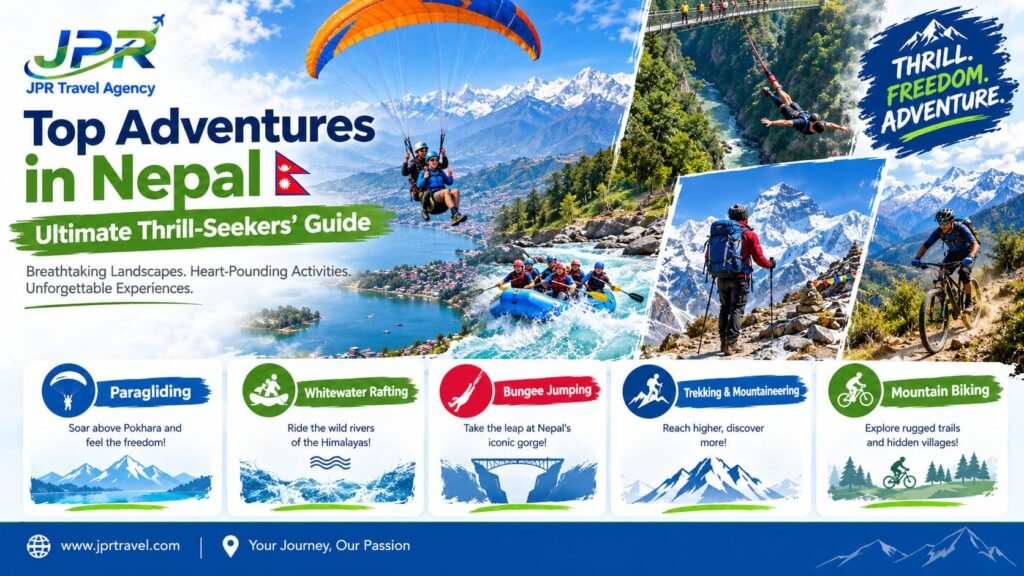
Nepal is famous around the world for Mount Everest, Himalayan trekking, and breathtaking mountain scenery. But the country offers far more than walking trails. From rushing through whitewater rapids and flying above Pokhara to jumping from a suspension bridge, climbing Himalayan peaks, and searching for rhinos in the Terai, adventures in Nepal come in many different forms.
The country’s extraordinary geography makes it ideal for adventure tourism. You can travel from subtropical jungle to high Himalayan terrain within a relatively short distance, combining physically demanding activities with cultural experiences and spectacular landscapes.
For international travelers, Nepal is particularly attractive because several major adventure activities can be combined into one trip. A visitor might trek in the Himalayas, go paragliding in Pokhara, enjoy whitewater rafting, and finish with a jungle safari in Chitwan or another national park.
This guide covers the 10 best adventure activities in Nepal, including where to experience them, who they are best suited to, the best seasons, and important planning considerations.
Why Nepal Is One of the Best Adventure Destinations in Asia
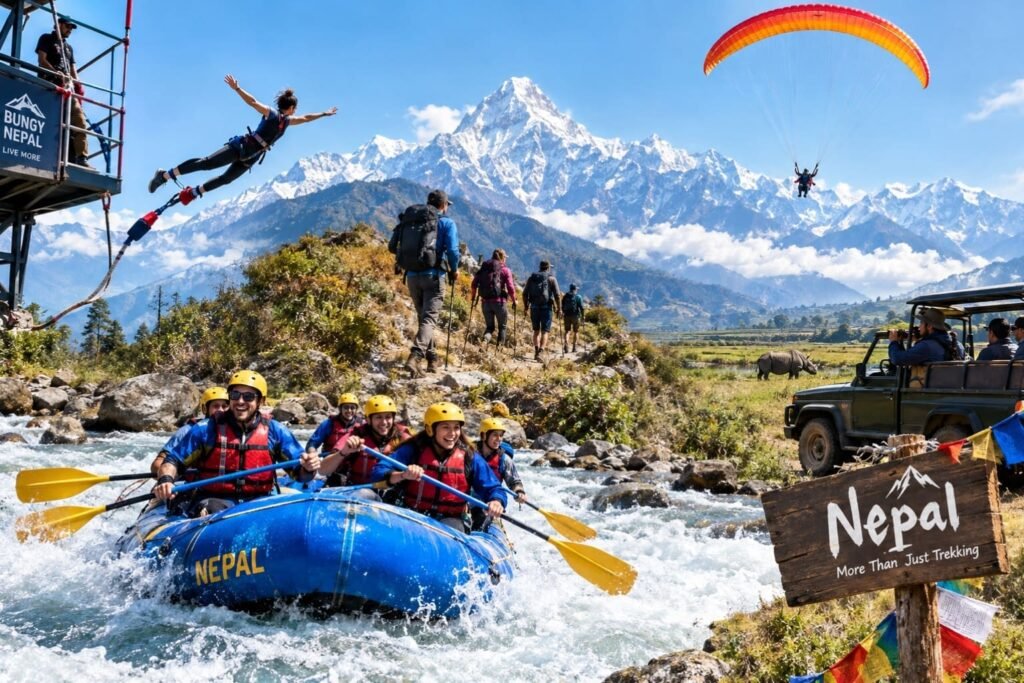
Nepal combines mountains, rivers, valleys, forests, cliffs and diverse wildlife within a relatively compact country. The Nepal Tourism Board officially promotes activities including trekking, zip flying, skydiving, bungee jumping, rafting, canyoning, mountain biking and paragliding.
This variety means you do not have to be an extreme athlete to enjoy adventure travel in Nepal. There are accessible experiences for first-time visitors as well as highly technical activities for experienced mountaineers and outdoor enthusiasts.
Pokhara is especially important for adventure travelers. The city and surrounding valley are major bases for paragliding, ultralight flights, mountain biking and other outdoor experiences.
1. Trekking in the Himalayas
Best for: Mountain lovers, hikers and first-time adventure travelers
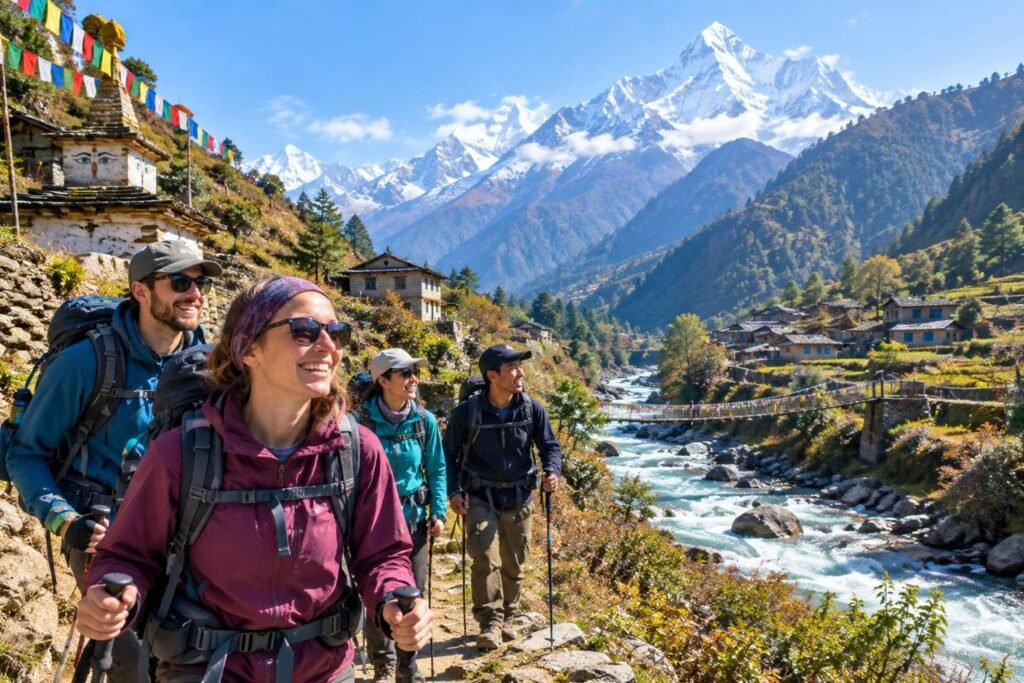
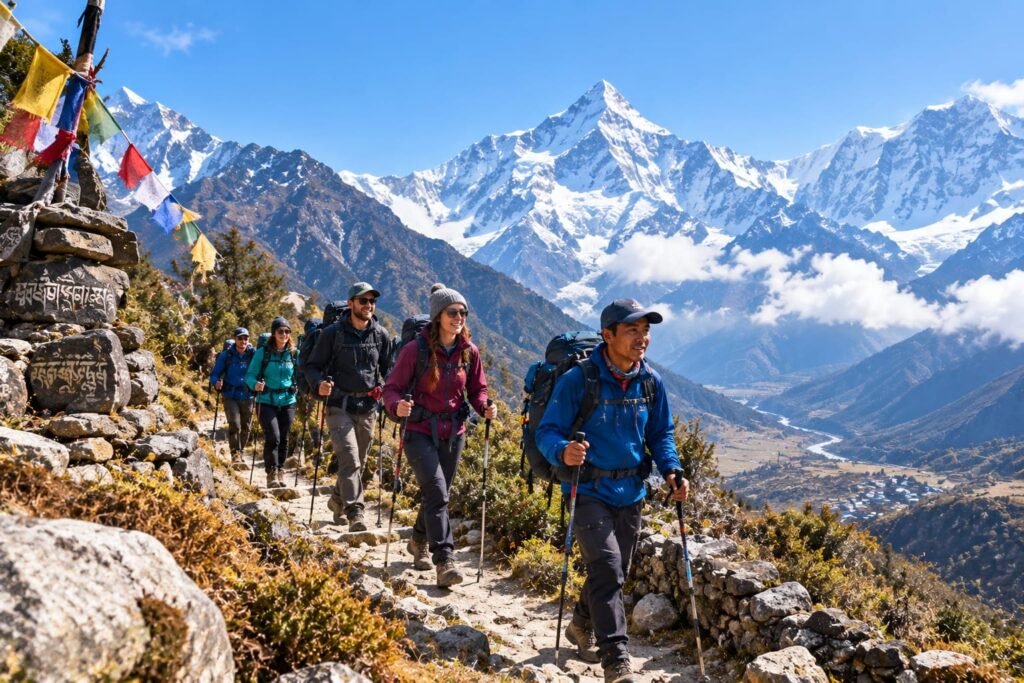
Trekking remains one of the most iconic adventure activities in Nepal. The country’s mountain trails lead through high-altitude valleys, traditional villages, rhododendron forests, suspension bridges and some of the world’s most spectacular Himalayan landscapes.
Popular choices include:
Everest Base Camp Trek
Annapurna Circuit Trek
Langtang Valley Trek
Manaslu Circuit Trek
Makalu Base Camp Trek
Upper Mustang Trek
The experience varies considerably depending on the route. Some treks are suitable for travelers looking for a relatively moderate Himalayan experience, while others involve high passes, remote terrain and demanding altitude gains.
For international visitors comparing different routes, our guide to the best trekking in Nepal is a useful starting point.
You can also explore our individual guides for the Everest Base Camp, Annapurna Circuit Trek, Langtang Valley Trek and Manaslu Circuit Trek.
Important trekking requirement for foreign visitors
Not every trekking route has the same permit and guide requirements. Under Nepal’s revised TIMS provisions, several major protected trekking routes require trekkers to travel with a licensed guide and carry a trekking-agency-issued TIMS card.
Restricted areas can also require a special trekking permit from the Department of Immigration.
2. Peak Climbing and Mountaineering
Best for: Experienced climbers and serious adventure travelers
For travelers looking for a more technical challenge, peak climbing in Nepal takes adventure to another level.
Nepal is home to eight of the world’s 14 peaks above 8,000 meters, including Mount Everest. Mountaineering permits are administered according to the mountain and its classification. The Nepal Tourism Board states that larger mountains are handled by the Ministry of Culture, Tourism and Civil Aviation, while smaller trekking peaks are administered through the Nepal Mountaineering Association.
Climbing options range from technical trekking peaks to major Himalayan expeditions. Popular names in Nepal’s climbing world include Mera Peak, Island Peak and Lobuche East, while Everest and other high mountains require much greater experience, preparation, logistics and support.
Mountaineering in Nepal is not simply a more difficult version of trekking. Climbers may need specialized equipment, technical skills, acclimatization, permits, qualified guides and appropriate insurance.
The Nepal Tourism Board identifies four official climbing seasons: spring, summer, autumn and winter, although conditions and suitability vary significantly by mountain.
Before planning a climbing expedition, check the latest permit rules, royalty rates, route conditions and operator requirements rather than relying on an old blog post.
3. Whitewater Rafting in Nepal
Best for: Groups, first-time adventurers and water-sports enthusiasts
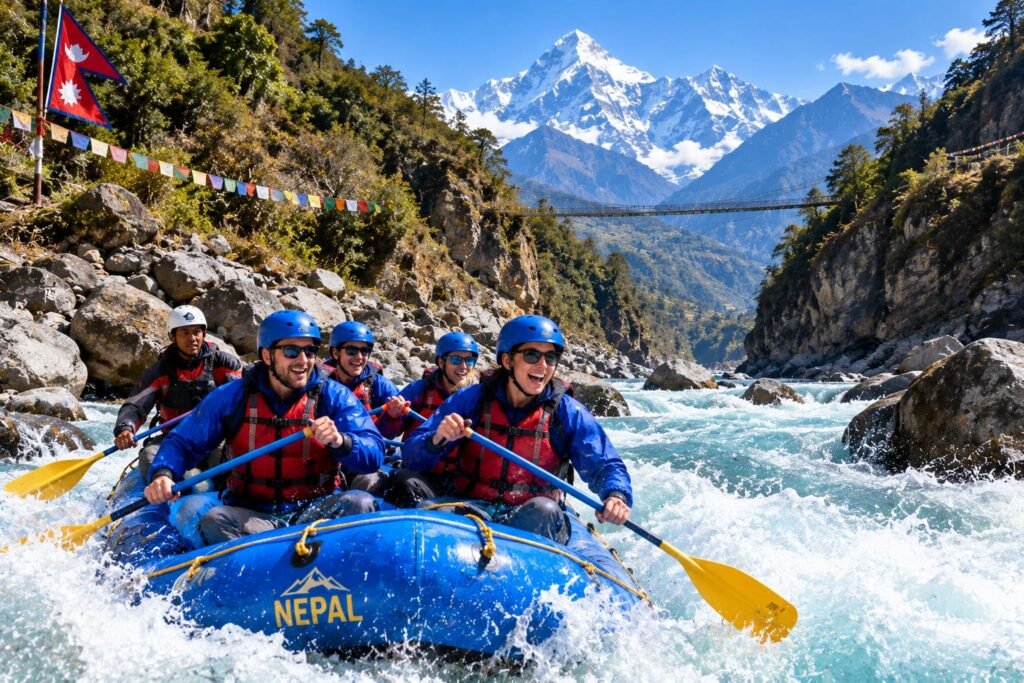
Nepal’s Himalayan rivers create some of the country’s best adventure sports in Nepal, especially for travelers who want excitement without committing to a multi-day trek.
Popular rivers include:
Trishuli River – one of the most accessible choices from Kathmandu
Bhote Koshi River – known for more challenging rapids
Kali Gandaki River – popular around the Pokhara region
Marshyangdi River – stronger whitewater for experienced rafters
Sun Koshi River – suitable for longer expedition-style trips
Karnali River – a remote option for major rafting adventures
The Nepal Tourism Board rates rapids from Class I to Class VI and notes that rafting seasons are generally concentrated around October to mid-December and March to early May.
For first-time visitors, Trishuli is often a convenient choice because it can be incorporated into a broader Nepal itinerary.
When choosing a rafting company, prioritize qualified guides, appropriate safety equipment, weather and river-condition checks, and a clear briefing before entering the water.
4. Paragliding in Pokhara
Best for: Travelers who want Himalayan views from the sky
Few experiences in Nepal compare with launching from Sarangkot and gliding above the Pokhara Valley.
Paragliding in Pokhara gives travelers an aerial perspective of Phewa Lake, surrounding hills, villages and Himalayan scenery. Nepal Tourism Board identifies Sarangkot as a major paragliding launch area, while Pokhara Tourism Council highlights September to April as the best period for paragliding in the region.
Most international visitors choose tandem paragliding, where a qualified pilot controls the flight while the passenger enjoys the views.
For many travelers, Pokhara works particularly well because several adventures can be combined in the same destination. You can go paragliding one morning, try ziplining or bungee jumping later, and spend another day exploring the lake and surrounding countryside.
Things to check before booking paragliding
Always confirm:
Pilot qualifications and operator reputation
Weather and flying conditions
Insurance coverage
Weight and health restrictions
What is included in the package
Whether photos or videos cost extra
Never choose an operator purely because it is the cheapest option.
5. Bungee Jumping in Nepal
Best for: Adrenaline seekers
Bungee jumping is one of the most recognizable extreme sports in Nepal.
One of Nepal’s best-known bungee experiences is near the Bhote Koshi River along the Arniko Highway, where visitors jump from a suspension bridge above a deep river gorge. Nepal Tourism Board also lists a tower bungee facility in Hemja, Pokhara.
The combination of height, river scenery and a dramatic valley makes bungee jumping especially attractive to travelers who want a short, high-adrenaline activity rather than a multi-day adventure.
Is bungee jumping safe?
No adventure activity should be described as completely risk-free. Conditions, equipment, operator procedures and individual health all matter.
Before jumping, follow the operator’s safety briefing and disclose relevant medical or physical limitations. Use an established operator that clearly explains its equipment, procedures, eligibility requirements and insurance arrangements.
6. Ziplining Above Pokhara Valley
Best for: First-time thrill seekers and families with older children
Ziplining is one of the easiest ways to add a high-adrenaline activity to a Nepal itinerary without needing advanced outdoor skills.
Pokhara’s famous ZipFlyer experience starts around Sarangkot and provides a fast descent with views toward the valley and Annapurna region. Nepal Tourism Board describes the attraction as covering around 1.8 km and reaching speeds of up to 140 km/h, depending on operating conditions.
The experience is particularly appealing to travelers who want something exciting but short enough to fit between other sightseeing activities.
Why choose ziplining?
It can be an excellent option for:
Couples
Friends traveling together
Families seeking an adventure activity
Travelers with limited time
Visitors who do not want a strenuous trek
Check operator age, weight and weather requirements before booking because these can vary.
7. Canyoning and Rock Climbing
Best for: Active travelers who enjoy technical outdoor activities
If you prefer something more hands-on, canyoning in Nepal combines walking, scrambling, climbing, swimming and abseiling through natural canyon environments. Nepal Tourism Board specifically describes canyoning as an activity requiring a reasonably good level of fitness.
Rock climbing is another option, particularly around Kathmandu and Pokhara. Nepal Tourism Board highlights climbing areas around Nagarjun and Shivapuri as well as an artificial climbing wall associated with the Mountaineering Museum in Pokhara.
These activities are ideal for travelers who want more than sightseeing but are not necessarily ready for a high-altitude climbing expedition.
What to bring
Wear secure footwear and comfortable outdoor clothing. Equipment should be provided or specified by the operator. Never improvise with ropes, harnesses or other technical climbing equipment.
8. Mountain Biking in Nepal
Best for: Cyclists and adventurous explorers
Nepal’s terrain creates almost endless possibilities for mountain biking in Nepal.
Cyclists can explore Kathmandu Valley trails, rural villages, forest tracks, river corridors and longer Himalayan routes. Nepal Tourism Board highlights trails around areas including Nagarkot, Kakani, Shivapuri, Godavari, Phulchowki, Chitlang and Chandragiri. Bikes can also be hired in Kathmandu and Pokhara.
Mountain biking is particularly attractive because it combines adventure with cultural travel. Instead of simply passing through a village by road, cyclists can travel at a slower pace and experience local communities, farmland and mountain landscapes.
For longer rides, however, terrain, weather, road conditions, altitude and bike maintenance become important considerations.
Mountain biking or motorbike touring?
A bicycle is ideal for travelers seeking a physically active experience, while a guided motorcycle tour can cover much more distance. Nepal Tourism Board lists motorbike routes and tours in destinations including Kathmandu, Pokhara, Rara and Mustang.
9. Jungle Safari in Nepal
Best for: Wildlife lovers and travelers who want a different side of Nepal
Nepal’s adventure scene is not limited to mountains.
The southern Terai region offers jungle safari experiences in Nepal, where travelers can explore protected areas and look for wildlife such as the one-horned rhinoceros and, in suitable habitats, the Bengal tiger.
Nepal Tourism Board identifies Chitwan National Park, Bardia National Park, Parsa and Shuklaphanta among the country’s major safari destinations. Jeep safaris are a practical choice for international travelers, while other nature experiences may include guided walks, canoe trips and birdwatching depending on the destination and park regulations.
Chitwan vs Bardia
Chitwan is the more established choice for many first-time visitors and can fit conveniently into a classic Nepal itinerary.
Bardia is appealing to travelers looking for a more remote wildlife experience.
Whatever park you choose, select a responsible safari company and respect wildlife-viewing rules. Never encourage guides to chase animals or disturb wildlife for photographs.
10. Skydiving in Nepal
Best for: Extreme adventure travelers
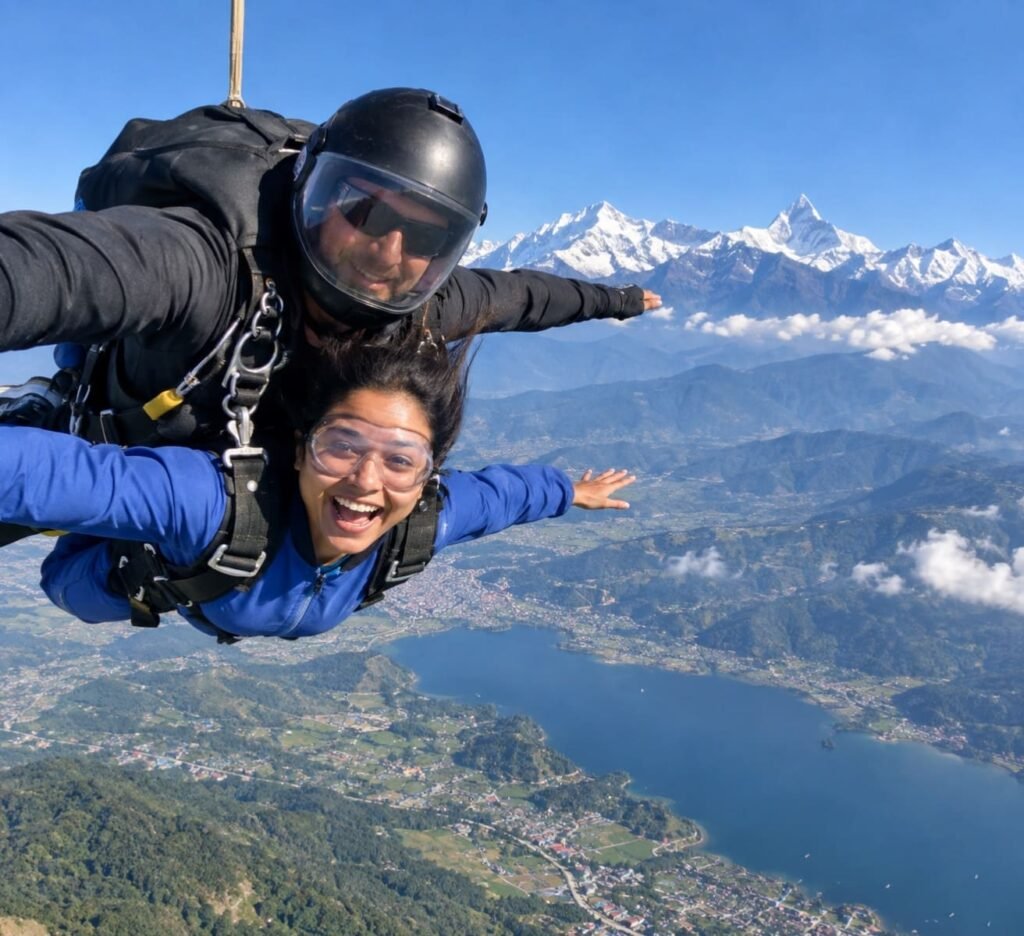
For the ultimate aerial experience, skydiving in Nepal combines free fall with Himalayan scenery.
Nepal Tourism Board lists skydiving experiences in both Pokhara and the Everest region. Everest skydiving is described as an exceptionally extreme experience involving a high-altitude drop zone around Gorak Shep and Kala Patthar, while Pokhara offers a less remote setting around the Annapurna region.
This is not an activity to book casually. Weather, aviation conditions, medical fitness, operator qualifications and specialized equipment are all important.
For international travelers considering skydiving, confirm exactly what the package includes, what altitude and aircraft are used, cancellation rules, insurance requirements and the operator’s current availability.
Bonus Adventure: Hot-Air Balloon or Mountain Flight
Not every adventure in Nepal has to involve extreme physical effort.
A hot-air balloon ride in Pokhara offers views of the Annapurna, Dhaulagiri, Hiunchuli, Fishtail and Lamjung ranges. Nepal Tourism Board recommends the period from September to May, outside the main monsoon months.
Another option is a mountain flight from Kathmandu, which offers a short aerial view of the Himalayas without requiring trekking or climbing. Nepal Tourism Board notes that most mountain flights operate in the morning, with weather and season affecting operations.
These experiences are especially useful for travelers who want spectacular Himalayan views but have limited time or do not want a physically demanding activity.
Best Adventures in Nepal at a Glance
| Adventure | Best Location | Difficulty | Good For |
|---|---|---|---|
| Himalayan Trekking | Everest, Annapurna, Langtang, Manaslu | Moderate–Hard | Hikers & mountain lovers |
| Peak Climbing | Himalayan regions | Hard–Extreme | Experienced climbers |
| Whitewater Rafting | Trishuli, Bhote Koshi, Kali Gandaki | Easy–Extreme | Groups & adventure travelers |
| Paragliding | Pokhara | Easy–Moderate | Aerial views |
| Bungee Jumping | Bhote Koshi, Pokhara | Extreme | Adrenaline seekers |
| Ziplining | Pokhara | Easy–Moderate | First-time thrill seekers |
| Canyoning | Selected canyon areas | Moderate | Active travelers |
| Mountain Biking | Kathmandu, Pokhara, Himalayan trails | Moderate–Hard | Cyclists |
| Jungle Safari | Chitwan, Bardia, Parsa, Shuklaphanta | Easy–Moderate | Wildlife lovers |
| Skydiving | Pokhara, Everest region | Extreme | Extreme adventure travelers |
Best Time for Adventure Activities in Nepal
There is no single “best month” for every adventure in Nepal because weather, altitude and geography vary by activity.
Spring: March to May
Spring is one of the strongest periods for Himalayan travel. It is particularly popular for trekking and mountaineering, while rafting conditions can also be favorable during the season.
Summer and Monsoon: June to August
Monsoon weather can bring heavy rain, clouds, muddy trails and changes in river conditions. Some activities become less reliable during this period.
That does not mean Nepal is closed in summer. Rain-shadow destinations such as parts of Upper Mustang can offer a very different experience, while some cultural and lower-altitude trips remain possible.
Autumn: September to November
Autumn is one of the most attractive periods for many travelers. Post-monsoon conditions often provide clearer mountain views, and activities such as trekking, rafting and paragliding can work particularly well depending on the destination. Pokhara Tourism Council identifies September to April as the best period for paragliding in the area.
Winter: December to February
Winter can be excellent for lower-altitude adventures, wildlife experiences, mountain views and selected activities. High-altitude routes and climbing objectives become more dependent on snow, temperature and route conditions.
How to Choose the Right Nepal Adventure
The best adventure depends on how much time you have, your fitness level and how much risk or physical challenge you want.
For a first-time visitor
Try a combination such as:
Kathmandu + rafting + Pokhara + paragliding + Chitwan safari
This gives you a mix of culture, river adventure, aerial activities, mountains and wildlife.
For serious trekkers
Focus on a Himalayan trekking route such as Everest Base Camp, Annapurna Circuit, Manaslu or Langtang.
For a broader trekking comparison, see our best trekking in Nepal guide.
For extreme adventure travelers
Consider combining:
Peak climbing + rafting + bungee jumping + skydiving
These require more careful planning and, in some cases, technical experience, permits and specialized operators.
For travelers with limited time
Pokhara is one of the easiest places to build an adventure-focused itinerary. You can combine paragliding, ziplining, mountain biking and other experiences while also enjoying Phewa Lake and Himalayan views.
Safety Tips for Adventure Travel in Nepal
Adventure is a major reason to visit Nepal, but good preparation is essential.
Choose reputable operators
Look for established companies with qualified guides, clear safety procedures and transparent terms.
Check weather before booking
Mountain, river and aviation activities can be highly weather-dependent. A trip scheduled for one day may need to change because of conditions.
Get appropriate travel insurance
Nepal Tourism Board recommends comprehensive travel insurance for trekking because medical treatment and helicopter rescue can be expensive.
Your policy should be checked carefully for exclusions involving high altitude, trekking, mountaineering and adventure sports.
Take altitude seriously
Altitude can affect travelers regardless of their fitness level. Nepal Tourism Board warns that acute mountain sickness can develop above approximately 3,000 meters and can become dangerous.
Do not treat altitude illness as something you simply have to “push through.” If symptoms become severe or worsen, descend and seek medical assistance.
Follow local rules and permits
Some trekking regions, conservation areas, national parks and climbing routes have specific permits or entry requirements. Always verify current requirements before travel.
Visa and Entry Information for International Travelers
Most foreign visitors should check Nepal’s visa requirements before booking adventure activities.
Nepal’s Department of Immigration states that Tribhuvan International Airport provides Visa on Arrival for eligible travelers. Current tourist visa fees listed by the Department are:
15 days: USD 30
30 days: USD 50
90 days: USD 125
However, not every nationality is eligible for Visa on Arrival. The Department of Immigration currently lists countries including Nigeria, Ghana, Zimbabwe, Cameroon, Somalia, Liberia, Ethiopia, Iraq, Palestine, Afghanistan and several others as restricted from Visa on Arrival. Travelers from those countries need to arrange their visa in advance.
Because immigration rules can change, international travelers should verify the latest requirements with Nepal’s Department of Immigration before departure.
For broader travel planning, you can also explore JPR Travel’s Nepal Tour options.
How to Build a Nepal Adventure Itinerary
A well-planned adventure holiday does not need to include every activity.
A popular structure for international travelers could be:
7-Day Adventure-Focused Nepal Trip
Day 1: Arrive in Kathmandu
Day 2: Kathmandu sightseeing and preparation
Day 3: Whitewater rafting
Day 4: Travel to Pokhara
Day 5: Paragliding and Pokhara exploration
Day 6: Ziplining or mountain biking
Day 7: Departure
10–14-Day Nepal Adventure Trip
With more time, you can combine Kathmandu and Pokhara with a short Himalayan trek or Chitwan wildlife experience.
For travelers wanting a more conventional holiday rather than a purely adventure-focused trip, explore our Nepal Tourand Packages pages.
Frequently Asked Questions About Adventures in Nepal
1. What are the best adventure activities in Nepal?
The best adventure activities in Nepal include Himalayan trekking, peak climbing, whitewater rafting, paragliding, bungee jumping, ziplining, canyoning, mountain biking, jungle safari and skydiving. The best choice depends on your fitness, available time, budget and desired level of adrenaline.
2. Is Nepal good for adventure tourism?
Yes. Nepal offers an unusually wide range of adventure experiences, from Himalayan trekking and mountaineering to rafting, aerial sports, mountain biking and wildlife activities. The country’s geography allows travelers to combine several types of adventure in one trip.
3. What is the most popular adventure activity in Nepal?
Trekking is arguably the most established adventure activity in Nepal, particularly in destinations such as Everest, Annapurna, Langtang and Manaslu. However, Pokhara is particularly well known for adventure sports such as paragliding, ziplining and other aerial experiences.
4. What is the best month for adventure activities in Nepal?
Autumn, especially September to November, and spring, especially March to May, are generally excellent periods for many outdoor activities. However, the ideal season varies by activity. For example, Nepal Tourism Board recommends October to mid-December and March to early May for many rafting trips, while Pokhara Tourism Council identifies September to April as a strong period for paragliding.
5. Is Nepal safe for adventure travel?
Nepal can be enjoyed safely with proper planning, but adventure sports naturally involve risks. Travelers should choose reputable operators, follow safety instructions, check weather conditions and carry appropriate travel insurance. High-altitude activities also require careful acclimatization.
6. Do foreigners need permits for adventure activities in Nepal?
Some activities and destinations require permits or entry fees. Trekking in restricted areas requires a special trekking permit, while mountaineering and climbing require the appropriate permits and permissions. Requirements depend on the activity and location.
7. Can I combine multiple adventure activities in one Nepal trip?
Yes. A multi-activity itinerary is one of the best ways to experience Nepal. For example, an international traveler could combine Kathmandu sightseeing, Himalayan trekking, rafting, Pokhara paragliding and a Chitwan safari in the same holiday.
Final Thoughts: Which Nepal Adventure Is Right for You?
The best adventures in Nepal are not limited to one type of traveler.
If you love mountains, choose trekking or peak climbing. If you want adrenaline, try bungee jumping, rafting, ziplining or skydiving. If you prefer spectacular views without extreme physical effort, paragliding, a mountain flight or a hot-air balloon ride may be ideal. Wildlife enthusiasts can head south for a jungle safari, while cyclists can explore Nepal’s varied mountain and valley trails.
The biggest advantage is that you can combine experiences. A single journey can take you from the cultural streets of Kathmandu to the rivers, hills, Himalayan trails and wildlife-rich lowlands of Nepal.
For international travelers planning their first trip, the key is not to choose the most extreme activity simply because it sounds impressive. Choose the experience that matches your fitness, travel style, available time and comfort level—and always verify current permits, safety procedures, weather conditions and entry requirements before departure.
Ready to explore Nepal? Browse JPR Travel’s Nepal Tour, Trekking and Packages options to build an itinerary around your preferred adventure.