
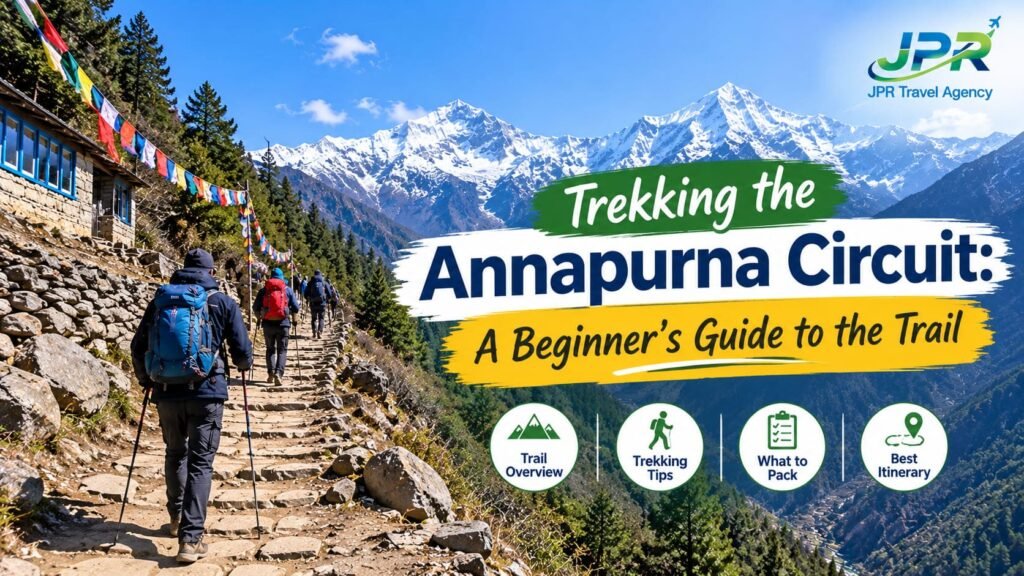
Few long-distance journeys match the dramatic variety of trekking the Annapurna Circuit. Over a single route, walkers travel from lush green valleys and misty mountain forests through traditional hillside villages to high alpine terrain and dry, wind-sculpted landscapes north of the main Himalayan peaks. Far more than a physical test to cross a high pass, the Annapurna Circuit trekking experience introduces visitors to Nepal’s extraordinary ecological shifts and welcoming mountain communities.
What Is the Annapurna Circuit Trek?
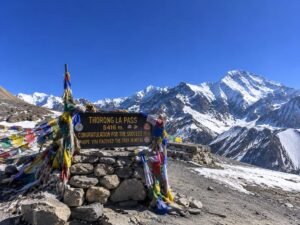
Located in central Nepal’s Annapurna Conservation Area, the Annapurna Circuit Trek is a long-distance route looping around the Annapurna massif—a geography that leads some travellers to search for it as the Annapurna Circle. Rising through the Marsyangdi River valley on the massif’s eastern flank, the trail crosses the 5,416-metre (17,769-foot) Thorong La Pass before descending into the deep Kali Gandaki Valley.
Rather than camping in isolated wilderness, walkers rely on teahouse trekking, sleeping and eating in village lodges spaced a few hours apart. Over recent years, expanding road access in both valleys has changed sections of the traditional Annapurna trail. Most trekkers now drive beyond Besisahar to start higher up around Jagat or Dharapani, follow marked pedestrian footpaths that bypass vehicle tracks where possible, and take transport after Muktinath or Jomsom. While less remote than the Manaslu Circuit Trek, this road network allows flexible itinerary lengths and practical exit options if weather or health issues arise.
From Lush Valleys to High-Altitude Alpine Landscapes
What sets the Annapurna mountain trail apart from single-valley hikes is how noticeably its environment transforms with altitude, location, and season across three distinct zones:
Lower Valleys and Green Landscapes
Between roughly 800 and 2,000 metres, the route follows rushing river valleys past terraced farmland, subtropical vegetation, forested hillsides, and lived-in stone villages.
Forested and Mountain Sections
From 2,000 to 3,500 metres, rocky paths and suspension bridges wind through cool pine, oak, and rhododendron forests beside waterfalls and increasingly dramatic views of peaks such as Annapurna II and Lamjung Himal.
Higher-Altitude and Dry Landscapes
Above 3,500 metres around Manang and toward Mustang, the trek enters the drier Himalayan rain shadow. Open high-altitude valleys, sparse alpine scrub, and rocky slopes reveal towering peaks—including Annapurna III, Gangapurna, and Dhaulagiri—on the approach to Thorong La Pass.
Local Culture and Villages Along the Annapurna Trail
Every Annapurna trek is also a cultural journey through diverse mountain settlements with distinct customs. Lower river valleys feature Hindu farming communities and hospitable Gurung villages in the mid-hills. Higher in the Marsyangdi Valley around Manang and Braga, Manangi communities maintain Tibetan Buddhist traditions visible in flat-roofed stone houses, prayer flags, carved mani walls, and centuries-old monasteries.
West of Thorong La Pass, trekkers visit Muktinath—a pilgrimage site sacred to both Hindus and Buddhists—before entering the Kali Gandaki Valley, where Thakali communities in towns like Marpha are known for courtyard architecture, apple orchards, and local cuisine. Visitors should practise responsible tourism: walk clockwise around Buddhist shrines, dress modestly at religious sites, respect village customs, and ask permission before photographing residents.
What Is Teahouse Life Like on the Annapurna Circuit?
For beginners experiencing Himalayan trekking in Nepal, daily life centres on family-run teahouses and mountain lodges. These offer warm local hospitality, though comfort and availability vary by village, elevation, and season and should not be compared with conventional hotels. Bedrooms usually provide twin beds with foam mattresses and blankets, alongside shared bathrooms at higher altitudes.
Evenings gather in a heated communal dining room over freshly cooked meals such as dal bhat (steamed rice, lentil soup, and seasonal vegetable curry), noodle soups, fried rice, porridge, and momos. Drinking plenty of treated water, hot herbal infusions, and garlic soup helps trekkers stay hydrated. Carry sufficient Nepali rupees for extra charges on hot showers, Wi-Fi, boiled water, and device charging, especially in higher villages reliant on solar power.
How Difficult Is the Annapurna Trek for Beginners?
While achievable for reasonably prepared beginners, the Annapurna hike is not an easy walk. Expect five to eight hours of daily walking over uneven terrain, steep ascents and descents, shifting temperatures, and consecutive days of cumulative fatigue. Increasing elevation reduces physical performance, making the climb over Thorong La Pass (5,416 m) a demanding high-altitude crossing.
Because physical fitness never prevents altitude illness, reading a dedicated altitude sickness guide is essential. Ascend gradually, take acclimatisation days around Manang, eat and hydrate well, and watch for headache, nausea, dizziness, or unusual exhaustion. Never ascend with concerning symptoms; descend immediately and seek medical assistance if serious altitude illness is suspected. Comprehensive travel insurance covering high-altitude trekking up to 5,500 metres and emergency helicopter evacuation is mandatory for safe planning. Beginners seeking gentler terrain can also consider the easiest trek in Nepal or the shorter Ghandruk Ghorepani Poon Hill trek.
How to Prepare Physically for Trekking the Annapurna Circuit
 Consistent preparation over eight to twelve weeks helps first-time trekkers build endurance for multi-day walking:
- Cardiovascular training: Combine regular brisk walking and hiking with jogging, cycling, or swimming.
- Uphill conditioning: Practise stair climbing and steep hill walks to prepare your lungs and knees for sustained ascents.
- Strength and balance: Use squats, lunges, step-ups, and core exercises to stay steady on rocky descents.
- Pack and footwear practice: Gradually increase walk duration with a weighted daypack, and wear in your trekking boots well before departure.
Good fitness supports daily recovery, but a steady pace, layered clothing for changing mountain weather, and proper acclimatisation remain essential.
Is the Annapurna Circuit Worth It for First-Time Trekkers?
For beginners ready for a demanding multi-day adventure, the Annapurna region rewards the effort with dramatic landscape transitions, towering Himalayan views, rich cultural encounters, and welcoming teahouse hospitality. However, travellers unprepared for consecutive walking days, basic mountain lodges, or high-altitude precautions may prefer a shorter lower-elevation trail.
Because trail conditions, transport links, and permit or guide rules can change, always verify the latest official requirements before a 2027 departure. Ready to plan your trek? Explore our main Annapurna Circuit Trek page or contact JPR Travel Agency for personalised planning support.
Frequently Asked Questions
1. Is the Annapurna Circuit Trek suitable for beginners?
Yes, reasonably fit beginners can complete the trek if they train in advance, pack for changing mountain weather, walk at a steady pace, and follow a gradual acclimatisation schedule with rest days.
2. How difficult is trekking the Annapurna Circuit?
It is a moderate-to-challenging multi-day trek involving five to eight hours of daily walking, steep ascents and descents, consecutive days on the trail, and crossing Thorong La Pass at 5,416 metres.
3. What kind of landscapes can you see along the Annapurna trail?
Trekkers pass through lush subtropical river valleys, terraced farmland, pine and rhododendron forests, wide alpine valleys, and the dry rain-shadow terrain around Manang and Mustang framed by high Himalayan peaks.
4. What is accommodation like on the Annapurna Circuit?
Accommodation consists of basic, family-run teahouses offering simple twin bedrooms, heated communal dining halls, freshly cooked local meals like dal bhat, and mostly shared bathroom facilities at higher elevations.
5. How fit do you need to be for the Annapurna hike?
You need solid cardiovascular endurance and leg strength built over several weeks of walking, uphill hiking, and stair climbing, though physical fitness alone does not prevent altitude sickness.
6. Do you need a guide to trek the Annapurna Circuit?
Foreign trekkers require an Annapurna Conservation Area Permit (ACAP) and a TIMS card. While Nepal Tourism Board regulations mandate licensed guides and local enforcement has varied, hiring a licensed guide is strongly recommended and rules should be verified before departure.
7. What is the best time of year to experience the Annapurna Circuit?
Spring (March to May) and autumn (late September to November) generally offer the most stable trail conditions, though mountain weather and visibility are never guaranteed in any season.