

The Ghandruk Ghorepani Poon Hill Trek is one of Nepal’s most rewarding short treks, combining mountain views, traditional Gurung villages, rhododendron forests, and the famous sunrise from Poon Hill. Located in the Annapurna region, this trek offers an opportunity to experience Himalayan landscapes and local culture without committing to a long, demanding expedition.
From the charming streets of Ghandruk village to the panoramic mountain scenery of Ghorepani and Poon Hill, every section offers something memorable. This guide covers the route, highlights, best seasons, difficulty, accommodation, and practical information to help you plan your journey.
What Makes the Ghandruk Ghorepani Poon Hill Trek Special?
The Ghandruk Ghorepani Poon Hill Trek is popular among travelers who want a genuine Himalayan trekking experience within a manageable timeframe. The trail passes through traditional settlements, forested hills, and viewpoints overlooking some of Nepal’s most recognizable peaks.
The trek is particularly appealing because it combines:
Spectacular views of the Annapurna and Dhaulagiri mountain ranges.
Cultural experiences in Gurung villages.
The sunrise panorama from Poon Hill.
Beautiful rhododendron forests and mountain landscapes.
Teahouse accommodation along the trail.
A relatively short itinerary suitable for many first-time trekkers.
Unlike longer Himalayan expeditions, this trek does not require crossing a high mountain pass or spending weeks in remote wilderness.
Ghandruk Village: A Cultural Highlight of the Trek
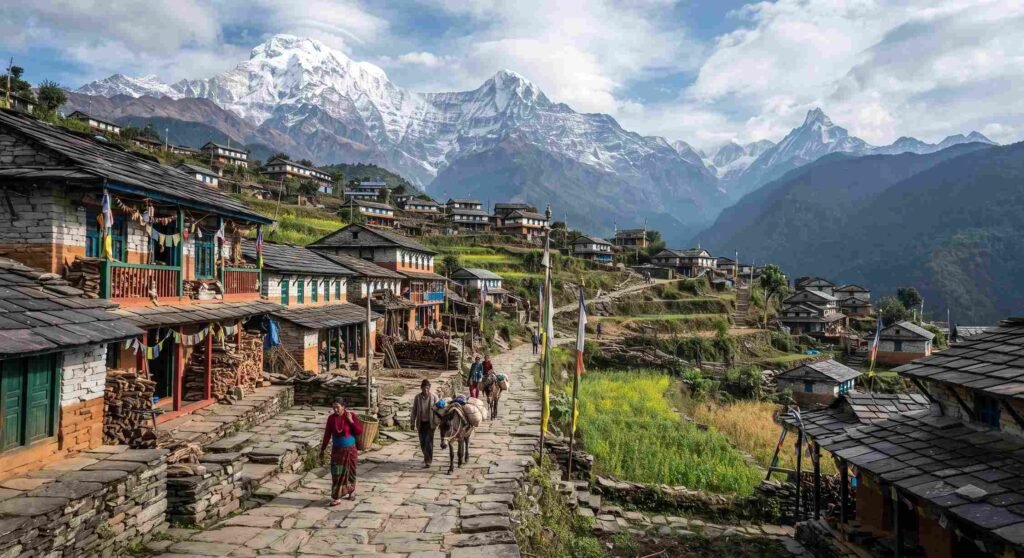
Discover Ghandruk Nepal
Ghandruk is a traditional Gurung settlement in the Annapurna region and one of the most attractive cultural stops on the trekking route. The village is known for its stone-paved paths, traditional houses, mountain views, and welcoming local communities.
Walking through Ghandruk village Nepal offers more than scenic views. It provides a chance to observe the region’s architecture, traditions, and everyday mountain life.
Visitors can explore:
Traditional Gurung homes and village pathways.
Local cultural museums and community spaces.
Terraced hillsides and surrounding forests.
Panoramic views of the Annapurna mountain range.
Local teahouses serving traditional Nepali meals.
Staying at a Gurung Cottage in Ghandruk
A stay at a Ghandruk Gurung cottage can add a cultural dimension to the trek. These locally operated accommodations allow visitors to experience village hospitality while enjoying the peaceful mountain surroundings.
A Gurung cottage Ghandruk stay may include simple rooms, traditional meals, and opportunities to interact with local residents. Facilities vary, so travelers should confirm room arrangements, bathrooms, and meal options before arrival.
Ghandruk is also a convenient starting point or finishing point for several trekking routes in the Annapurna region.
Ghorepani and Poon Hill: The Main Highlights
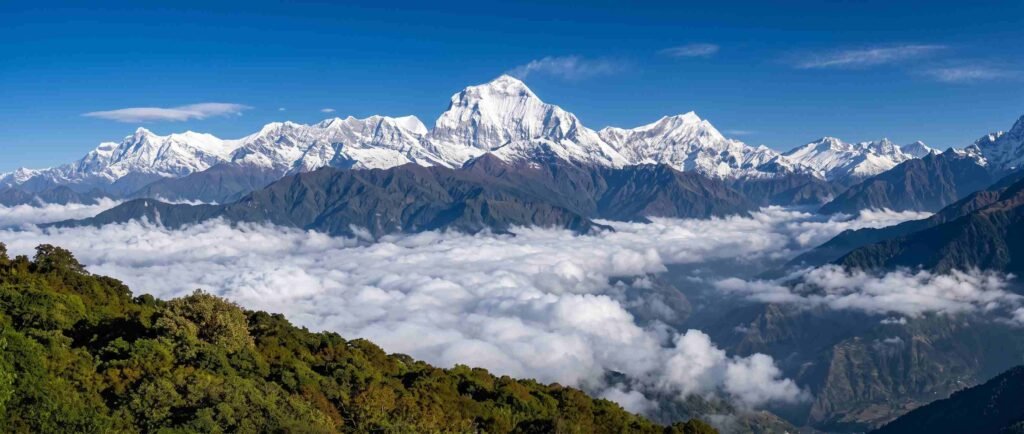
Ghorepani Nepal: A Scenic Mountain Settlement
Ghorepani Nepal is a well-known trekking village situated along popular routes in the Annapurna region. Surrounded by forested hills and mountain scenery, it serves as an important overnight stop for trekkers heading toward Poon Hill.
The village offers:
Teahouses and lodges for trekkers.
Mountain views and peaceful surroundings.
Access to the Poon Hill viewpoint.
Trails through rhododendron and oak forests.
A convenient resting point before an early-morning sunrise hike.
The atmosphere in Ghorepani changes with the seasons. Spring brings colorful rhododendron blooms, while autumn often offers clear mountain visibility.
Poon Hill Sunrise: A View Worth the Early Start
Poon Hill is the signature attraction of the trek. Trekkers typically wake before dawn and hike to the viewpoint to watch the sun rise over the Himalayas.
From the viewpoint, visitors may see magnificent peaks such as:
Annapurna South.
Annapurna I.
Dhaulagiri.
Hiunchuli.
Machhapuchhre, depending on visibility and viewpoint.
The sunrise gradually illuminates the surrounding mountains, creating one of the most memorable experiences in the Annapurna region.
For many travelers, this early-morning climb is the defining moment of their Ghorepani Poon Hill trek.
Ghandruk Ghorepani Poon Hill Trek Route and Itinerary
The route can be arranged in different ways depending on the starting point, transportation, available time, and trekking preferences. A common itinerary connects Ghandruk, Tadapani, Ghorepani, and Poon Hill before descending toward the lower hills.
The following is an example of a 5-day trekking itinerary. Actual walking hours and overnight stops may vary according to trail conditions and the chosen route.
Day 1: Drive to Ghandruk and Explore the Village
Begin the journey with a drive from Pokhara toward Ghandruk. The road passes through hilly landscapes, rural settlements, and terraced farmland.
After reaching Ghandruk, settle into your accommodation and explore the village. Spend time walking along stone-paved paths, enjoying mountain views, and experiencing Gurung culture.
Overnight: Ghandruk.
Day 2: Ghandruk to Tadapani
After breakfast, begin trekking through forested trails toward Tadapani. The route includes gradual ascents and descents through rhododendron and oak forests.
Tadapani is known for its mountain scenery and peaceful forest surroundings.
Overnight: Tadapani.
Day 3: Tadapani to Ghorepani
The trail continues through forests and mountain terrain toward Ghorepani. Along the way, trekkers encounter changing landscapes, local settlements, and beautiful Himalayan views.
After arriving at Ghorepani, rest and prepare for the early-morning hike to Poon Hill.
Overnight: Ghorepani.
Day 4: Poon Hill Sunrise and Trek Toward Ulleri
Wake early and hike to Poon Hill for sunrise. After enjoying the mountain panorama, return to Ghorepani for breakfast.
Continue descending toward Ulleri through forested trails and stone stairways. This section provides a different perspective of the surrounding hills.
Overnight: Ulleri or a nearby settlement, depending on the itinerary.
Day 5: Return to Pokhara
After breakfast, complete the remaining descent and take transportation toward Pokhara.
Use the afternoon to relax, explore the lakeside area, or continue with other travel plans.
Overnight: Pokhara or onward destination.
Ghandruk Ghorepani Trek Difficulty and Walking Conditions
The Ghandruk Ghorepani trek is generally considered a moderate short trek. It is accessible to many travelers with reasonable fitness, although the route still involves uphill climbs, downhill sections, and numerous stone steps.
What Makes the Trek Challenging?
Several factors influence the difficulty:
Daily walking duration.
Repeated ascents and descents.
Uneven stone staircases.
Weather and trail conditions.
Personal fitness and trekking experience.
The early-morning climb to Poon Hill.
The trek does not require advanced mountaineering skills, but preparation is still important.
Who Can Enjoy This Trek?
The route may suit:
First-time Himalayan trekkers.
Couples seeking a scenic mountain adventure.
Families with older children and appropriate preparation.
Solo travelers who prefer established trekking routes.
Travelers with limited time in Nepal.
Visitors interested in combining nature and cultural experiences.
Fitness requirements depend on the itinerary and individual circumstances. Travelers should choose a pace that matches their abilities.
For those comparing different trekking options, our guide to the easiest trek in Nepal offers additional context on beginner-friendly routes.
Best Time for Ghorepani Poon Hill Trekking
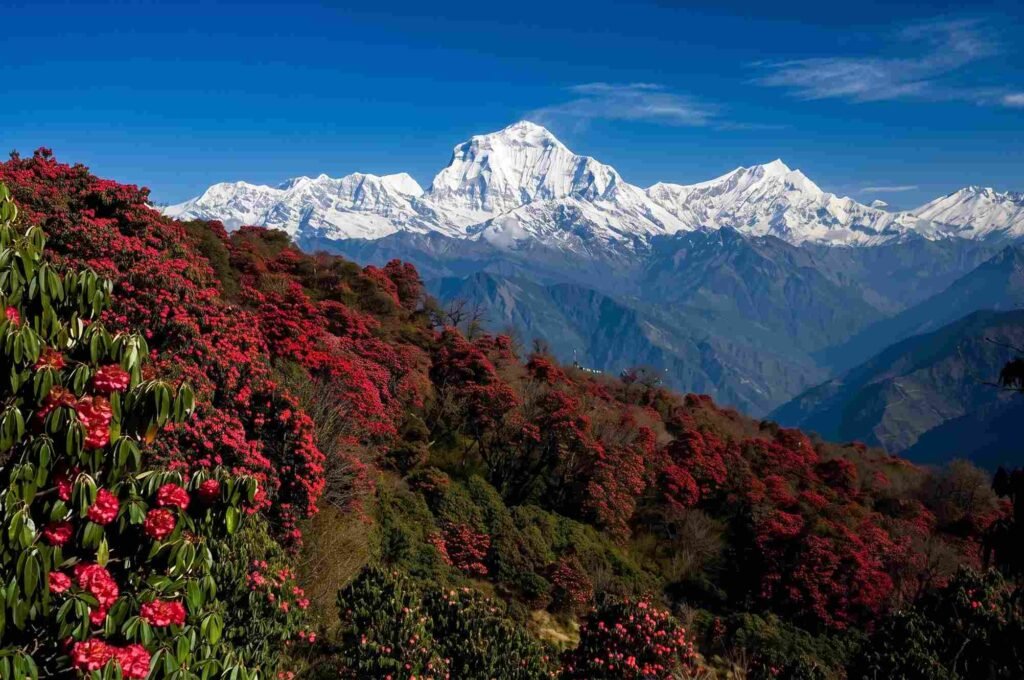
Choosing the right season can significantly improve your trekking experience. Weather affects mountain visibility, trail conditions, temperatures, and the overall scenery.
Spring: March to May
Spring is one of the most attractive seasons for the trek.
Highlights include:
Blooming rhododendron forests.
Pleasant daytime temperatures.
Green hillsides and colorful landscapes.
Good opportunities for mountain photography.
The trails can become busier during popular travel periods.
Autumn: September to November
Autumn is another preferred season for Ghorepani Poon Hill trekking.
Travelers often enjoy:
Clearer mountain views.
Comfortable trekking temperatures.
Fresh landscapes following the monsoon.
Favorable conditions for sunrise photography.
October and November are commonly popular months for trekking in Nepal.
Winter: December to February
Winter brings colder temperatures, especially during early mornings and at higher elevations.
However, the trails can offer peaceful surroundings and crisp mountain views when weather conditions are favorable.
Pack warm clothing and check the forecast before departure.
Monsoon: June to August
The monsoon season brings rainfall, slippery trails, cloud cover, and possible travel disruptions.
Trekkers may encounter:
Muddy paths.
Reduced mountain visibility.
Leeches in some forested areas.
Rain-related road challenges.
The trek remains possible with suitable preparation, but conditions may be less predictable.
Accommodation and Food Along the Trek
The Ghandruk Ghorepani Poon Hill Trek follows established trekking routes with teahouses and lodges in major overnight settlements.
Teahouse Accommodation
Typical facilities may include:
Basic private or shared rooms.
Shared bathrooms in some lodges.
Dining areas with heating in certain locations.
Blankets or additional bedding, depending on availability.
Simple mountain hospitality.
Accommodation standards vary between villages, so expectations should remain realistic.
Food and Drinks
Common meals along the trail include:
Dal bhat.
Noodles.
Fried rice.
Soups.
Momos.
Eggs and breakfast items.
Tea, coffee, and other hot drinks.
Dal bhat is a particularly practical trekking meal because it provides carbohydrates, protein, and energy for long walking days.
Carry snacks such as energy bars, nuts, or dried fruit for additional nourishment.
What to Pack for the Ghandruk Ghorepani Poon Hill Trek
Packing appropriately helps make the trek more comfortable and manageable.
Essential Trekking Gear
Comfortable trekking shoes with good grip.
Lightweight backpack.
Warm layers and a fleece jacket.
Waterproof jacket or rain protection.
Trekking trousers and moisture-wicking clothing.
Warm hat and gloves.
Sunglasses and sunscreen.
Reusable water bottle.
Headlamp for the early-morning Poon Hill hike.
Personal toiletries and basic medications.
Power bank and charging accessories.
Additional Items Worth Carrying
Depending on the season, consider:
Trekking poles for steep steps.
Thermal innerwear during colder months.
Waterproof backpack cover.
Quick-drying socks.
Small first-aid kit.
Camera or smartphone for photography.
Avoid overpacking. A lighter bag makes uphill and downhill walking easier.
Permits and Preparation for the Trek
Before starting your journey, confirm the permits and entry requirements applicable to your chosen route. Trekking regulations can change, and requirements may depend on the itinerary and current local rules.
It is also helpful to arrange:
Transportation to and from the trekking area.
Accommodation for overnight stops.
A guide or porter, if desired.
Travel insurance covering trekking activities.
Emergency contact information.
Weather and trail condition updates.
Travelers unfamiliar with the region may find it useful to work with a local trekking agency for logistics and route planning.
You can explore JPR Travel’s trekking services in Nepal to learn more about available trekking arrangements.
Most travelers begin their journey from Pokhara, a major gateway to the Annapurna region.
Reaching Pokhara
Travelers can reach Pokhara from Kathmandu by road or domestic flight. Flying is generally a convenient option for those with limited time.
For flight arrangements, you can check JPR Travel’s Kathmandu to Pokhara flight service .
Getting to Ghandruk
Ghandruk is accessible by road from Pokhara, although the journey involves winding hill roads and changing terrain.
Depending on the selected itinerary, travelers may:
Drive directly to Ghandruk.
Begin trekking from a lower trailhead.
Combine road transportation with trekking.
Road conditions and travel times can vary, so confirm current transportation arrangements before departure. If you are looking for Ghandruk Ghorepani Poon Hill Trek package then we have 7 days trek package of Ghorepani Poon Hill with Ghandruk.
Tips for a Comfortable Ghandruk Ghorepani Poon Hill Trek
A few practical habits can make the journey smoother.
1. Start Walking Early
Early starts help you manage walking hours comfortably and leave time for breaks or sightseeing.
2. Stay Hydrated
Drink water regularly throughout the day, especially during uphill sections.
3. Walk at a Comfortable Pace
There is no need to rush. Consistent walking with regular breaks is often more sustainable than pushing too hard.
4. Prepare for Changing Weather
Mountain weather can shift quickly. Keep rain protection and warm layers accessible.
5. Respect Local Culture
Ghandruk and surrounding villages are home to established communities with distinct traditions. Dress respectfully, ask permission before photographing people, and support local businesses where possible.
6. Carry Cash
ATMs and card payment facilities may not be available throughout the trekking route. Carry sufficient Nepalese rupees for food, accommodation, and other expenses.
7. Leave No Trace
Dispose of waste responsibly and avoid damaging the natural environment.
Ghandruk Ghorepani Poon Hill Trek vs Other Popular Treks in Nepal
Nepal offers trekking routes with different durations, landscapes, and levels of physical demand.
| Trek | Main Attraction | Typical Experience |
|---|---|---|
|
Ghandruk Ghorepani Poon Hill Trek |
Sunrise views, Gurung villages, rhododendron forests |
Short to moderate Himalayan trek |
|
Langtang Valley Trek |
Mountain scenery, Tamang culture, alpine landscapes |
Moderate multi-day trek |
|
Annapurna Circuit Trek |
Diverse landscapes and high mountain passes |
Longer, more demanding adventure |
|
Everest Base Camp Trek |
Iconic Himalayan peaks and Everest Base Camp |
Extended high-altitude trek |
|
Manaslu Circuit Trek |
Remote mountain scenery and cultural diversity |
Challenging, longer circuit trek |
If you are exploring alternatives, consider the Langtang Valley Trek for a different Himalayan experience or browse our best trekking destinations in Nepal for additional ideas.
Frequently Asked Questions About the Ghorepani Poon Hill Trek
How many days are needed for the Ghandruk Ghorepani Poon Hill Trek?
A common itinerary takes around 4 to 6 days, depending on the route, transportation, and overnight stops. Some travelers choose shorter or longer variations.
Is the Ghandruk Ghorepani Poon Hill Trek suitable for beginners?
Yes, many beginners complete this trek with preparation and a manageable itinerary. However, the route includes uphill climbs, stone steps, and long walking days, so reasonable fitness is helpful.
What is the highest point of the Ghorepani Poon Hill trek?
Poon Hill viewpoint is approximately 3,210 meters above sea level. The elevation makes it important to walk at a comfortable pace and remain aware of altitude-related symptoms.
Is Ghandruk worth visiting?
Ghandruk is well worth including for travelers interested in Gurung culture, traditional mountain villages, and Himalayan scenery. Its architecture and surrounding landscapes make it a memorable stop.
Can I stay in a Gurung cottage in Ghandruk?
Yes, Ghandruk has locally operated lodges and traditional-style accommodations. Availability and facilities vary, so confirm arrangements before traveling.
Which months are best for Ghorepani Poon Hill trekking?
Spring and autumn are generally preferred for favorable weather, mountain visibility, and trekking conditions. March to May and September to November are commonly popular periods.
Do I need a guide for the Ghandruk Ghorepani Poon Hill Trek?
A guide is not always necessary for experienced trekkers on established routes, but hiring one can provide assistance with navigation, logistics, local culture, and unexpected situations.
What should I pack for the Poon Hill sunrise hike?
Carry a warm jacket, gloves, a headlamp, water, and comfortable footwear. Early mornings can be cold, even during trekking seasons with mild daytime temperatures.
Plan Your Ghandruk Ghorepani Poon Hill Trek with JPR Travel
The Ghandruk Ghorepani Poon Hill Trek brings together mountain scenery, cultural discovery, and an accessible Himalayan adventure. From the traditional Gurung homes of Ghandruk to the sunrise panorama at Poon Hill, the journey offers a memorable way to explore Nepal’s Annapurna region.
With suitable preparation, the right season, and a well-planned itinerary, this trek can become one of the highlights of your Nepal visit.
Explore JPR Travel’s Nepal tour options or contact our team to discuss trekking arrangements, transportation, and your preferred travel plans.