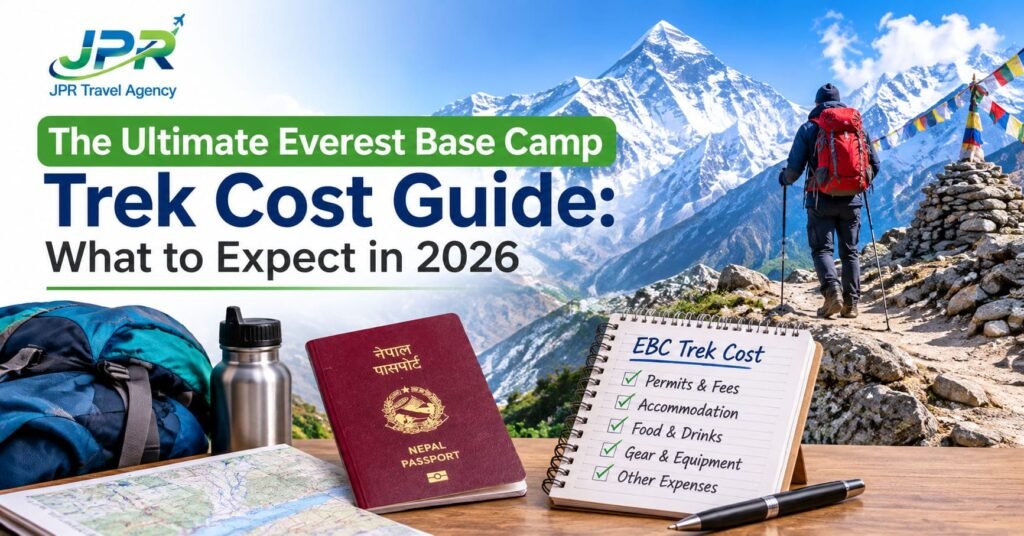
Planni b ng a journey to the foot of the world’s highest peak starts with one practical question: what is the realistic Everest Base Camp trek cost in 2026? While the trail through the Khumbu Valley welcomes everyone from independent backpackers to luxury lodge guests, your final expenditure depends on your trekking style, travel season, group size, transportation choices, and whether you hire a guide and porter.
For a standard 12-to-14-day itinerary in 2026, most international trekkers spend between USD $1,300 and $2,200 (approximately NPR 195,000 to NPR 330,000) per person, excluding international airfare. Understanding how permits, domestic flights, teahouse rates, and on-trail extras add up will help you set a reliable budget before you head to the Himalayas. If you are still researching routes and daily distances, review our comprehensive Everest Base Camp trek guide for itinerary planning.
How Much Does the Everest Base Camp Trek Cost in 2026?
The overall Everest Base Camp trek price varies across three main budget tiers. All currency conversions in this guide use an approximate November 2026 exchange rate of 1 USD = 150 NPR; actual rates fluctuate daily.
| Trekking Tier (12–14 Days, Per Person) | Estimated Cost (USD / NPR) |
|---|---|
| Budget / Independent or Group Join-In | $1,100 – $1,500 (NPR 165,000 – 225,000) |
| Standard Full-Board Guided Package | $1,600 – $2,200 (NPR 240,000 – 330,000) |
| Premium / Luxury Lodge Trek | $2,800 – $4,500+ (NPR 420,000 – 675,000+) |
- Budget Trekking: Covers basic teahouse rooms, standard trail meals, mandatory permits, and round-trip flights or ground transfers to Lukla. Trekkers at this level either walk independently or share guide and porter expenses in a larger group.
- Standard Trekking: Represents the most common EBC trek price booked through a licensed Nepali agency. Estimates are per person and generally include round-trip domestic flights, permits, standard teahouse accommodation, three daily meals, a licensed guide, and shared porter support.
- Premium or Luxury Trekking: Includes upgraded boutique lodges where available (such as in Lukla, Phakding, Namche Bazaar, and Dingboche), heated rooms, hot showers, private guides, and sometimes a helicopter return flight from Gorak Shep to Lukla or Kathmandu.
Note: All package and daily figures are planning estimates. Final prices vary by season, availability, custom itinerary modifications, and service provider.
Detailed Everest Base Camp Trek Cost Breakdown
Every EBC trek cost comprises fixed official fees and variable daily expenses that rise with altitude.
| Expense Category (Per Person Estimate) | 2026 Cost in NPR and USD |
|---|---|
| Sagarmatha National Park Permit | NPR 3,000 (~$20 USD) for foreigners |
| Khumbu Rural Municipality Permit | NPR 3,000 (~$20 USD) for foreigners |
| Kathmandu–Lukla Flight (Round Trip) | NPR 75,000 – 77,100 (~$500 – $514 USD) |
| Ramechhap–Lukla Flight (Round Trip) | NPR 52,500 – 63,000 (~$350 – $420 USD) |
| Teahouse Accommodation (Per Night) | NPR 750 – 7,500 (~$5 – $50 USD) |
| Food and Water (Per Day) | NPR 3,750 – 6,000 (~$25 – $40 USD) |
| Licensed Guide (Per Day) | NPR 3,750 – 6,750 (~$25 – $45 USD) |
| Porter (Per Day, Shared by 2 Trekkers) | NPR 2,700 – 4,500 (~$18 – $30 USD) |
| High-Altitude Travel Insurance | NPR 22,500 – 37,500 (~$150 – $250 USD) |
1. Trekking Permits and Fees
Trekkers entering the Everest region along the classic Lukla route require two official permits in 2026:
- Sagarmatha National Park Entry Permit: Published fee of NPR 3,000 (~$20 USD) per person for foreign nationals, NPR 1,500 (~$10 USD) for SAARC nationals, and NPR 100 for Nepali citizens (obtained in Kathmandu at the Nepal Tourism Board office or at the Monjo park entrance). Keep an extra NPR 390 on hand in case the 13% VAT is charged separately at the counter.
- Khumbu Pasang Lhamu Rural Municipality Entrance Permit (Trek Card): NPR 3,000 (~$20 USD) per person for foreign nationals for the first four weeks, and NPR 2,000 (~$13.50 USD) for SAARC and Chinese nationals. This permit is issued in person upon arrival in Lukla or Monjo.
- TIMS Card: A TIMS card is not required for the standard Everest Base Camp route, as the Khumbu municipality runs its own digital Trek Card system. (Trekkers walking in overland from Jiri must additionally pay NPR 3,000 for the Gaurishankar Conservation Area Permit).
2. Flights and Transportation
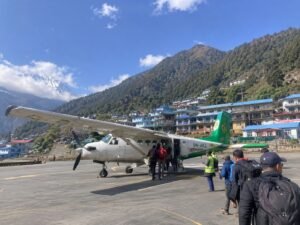 Most trekkers fly into Tenzing-Hillary Airport in Lukla. Because flight operations shift between Kathmandu and Ramechhap (Manthali Airport) during peak spring and autumn congested windows, check current routing in our Kathmandu to Lukla flight resource.
- Kathmandu to Lukla: Approximately $230 to $257 USD (NPR 34,500–38,550) one way for foreign nationals.Nepali citizens pay approximately NPR 10,600 to 12,420 (~$71–$83 USD) one way.
- Ramechhap to Lukla: Approximately $175 to $210 USD (NPR 26,250–31,500) one way for foreign nationals.
- Kathmandu–Ramechhap Ground Transfer: Shared tourist buses or vans cost $25 to $40 USD (NPR 3,750–6,000) per person each way; private jeep hires range from $120 to $160 USD (NPR 18,000–24,000) per vehicle.
3. Accommodation
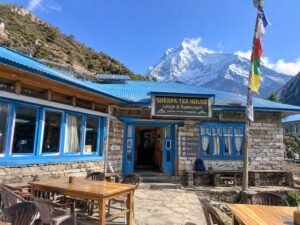 Standard teahouses provide twin bedrooms with shared or attached bathrooms. In lower villages like Phakding and Monjo, basic rooms cost NPR 750 to 2,250 ($5–$15 USD) per night. In Namche Bazaar and Tengboche, expect NPR 2,250 to 4,500 ($15–$30 USD), rising to NPR 3,000 to 7,500 ($20–$50 USD) in high-altitude stops like Dingboche, Lobuche, and Gorak Shep. Teahouses normally expect guests to eat dinner and breakfast at the same lodge.
4. Food and Drinks
Menu prices climb steadily with elevation because supplies are carried by porters, yaks, or helicopters:
- Meals: Breakfast costs NPR 750–1,500 ($5–$10 USD), and lunch or dinner (such as dal bhat, pasta, soup, or momos) ranges from NPR 900–2,250 ($6–$15 USD) per meal.
- Drinks: Boiled drinking water or tea/coffee costs NPR 300–600 ($2–$4 USD) per cup or liter. Using water purification tablets or a UV filter bottle cuts daily water expenses significantly.
5. Additional Teahouse Expenses
Teahouses charge separately for utilities above Lukla:
- Hot Showers: NPR 500–1,000 ($3.50–$7 USD) per gas or solar shower.
- Device Charging: NPR 300–1,000 ($2–$7 USD) per hour or per full battery charge (higher at Lobuche and Gorak Shep).
- Wi-Fi (Everest Link or Lodge Wi-Fi): NPR 500–1,500 ($3.50–$10 USD) per data card or daily pass.
6. Guide Costs
A government-licensed trekking guide charges NPR 3,750 to 6,750 ($25–$45 USD) per day depending on experience and language skills. When hired through an agency, this rate typically covers the guide’s meals, lodge accommodation, and insurance, though independent hires should confirm whether daily food and Lukla flight costs are included or billed separately.
7. Porter Costs
Hiring a porter costs NPR 2,700 to 4,500 ($18–$30 USD) per day, including their food and accommodation. Porters typically carry a combined maximum load of 20 to 25 kg (44 to 55 lbs), meaning two trekkers can easily share one porter to halve the expense.
8. Travel Insurance
Valid travel insurance covering high-altitude trekking up to 6,000 meters (to cover Kala Patthar at 5,545 meters) and emergency helicopter medical evacuation is essential and checked for permit processing. A 14-to-21-day policy typically costs $150 to $250 USD (NPR 22,500–37,500) depending on your age, home country, and coverage limits. Read our altitude sickness guide to understand why proper acclimatisation and medical cover are vital above 3,000 meters.
9. Trekking Equipment
If you do not own cold-weather gear, budget $100 to $300 USD (NPR 15,000–45,000) to rent or buy extras in Thamel, Kathmandu. Renting a four-season down sleeping bag or heavy down jacket costs roughly NPR 150 to 300 ($1–$2 USD)per item per day.
10. Personal Expenses
Set aside $150 to $250 USD (NPR 22,500–37,500) for trail snacks (chocolate bars, nuts, electrolytes), wet wipes, toiletries, souvenirs, and customary tips. Standard tipping etiquette in 2026 is $10–$15 USD per day for a guide and $8–$10 USD per day for a porter, paid in cash at the end of the trek.
11. Emergency Budget
Keep an emergency reserve of $200 to $400 USD (NPR 30,000–60,000) in accessible funds. Mountain weather in Lukla frequently delays flights by one to three days, requiring extra hotel nights, meals, or ticket rebooking fees.
12. Helicopter Costs
Do not confuse optional helicopter transfers with emergency evacuations:
- Optional Helicopter Return: Trekkers who wish to skip the multi-day walk back from Gorak Shep can book a shared helicopter seat to Lukla or Kathmandu for approximately $800 to $1,500 USD per person, or charter a private helicopter for $4,500 to $7,000 USD.
- Emergency Medical Evacuation: A life-saving rescue flight from high camps costs $4,000 to $8,000+ USDbefore hospital bills. This is covered by qualifying high-altitude insurance policies, provided your insurer’s 24-hour assistance line approves the dispatch.
Guided vs Independent Everest Base Camp Trek
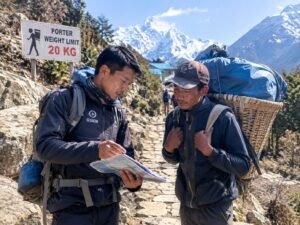 Before comparing options, it is important to clarify the current 2026 regulation: independent trekking without a guide remains legally permitted in the Everest (Khumbu) region. While the Nepal Tourism Board mandated licensed guides across TIMS-regulated trails nationwide in 2023, the Khumbu Pasang Lhamu Rural Municipality operates its own permit system and does not enforce a mandatory guide requirement on the standard Everest Base Camp route. (Guides remain mandatory if you cross into restricted areas or climb trekking peaks like Island Peak.)
- Trekking Independently: Lowest upfront cost Everest option, as you pay only for permits, transport, rooms, and meals. However, you must queue for permits yourself, secure scarce teahouse beds during peak October and April weeks, and manage Lukla flight cancellations and altitude health monitoring without local support.
- Joining a Group Trek: Ideal for solo travellers wanting safety and lower per-person rates. Fixed-departure groups split guide and porter wages across 4 to 12 participants, keeping package prices competitive.Swotah Travel
- Hiring a Private Guide (Guide-Only): A flexible middle ground where you hire a licensed guide for $25–$45 USD per day to handle navigation, teahouse bookings, and safety while paying for food and lodges directly on the trail.
- Booking a Complete Agency Package: Removes logistical stress by bundling domestic air ticket bookings, airport transfers, permits, advance lodge reservations, meals, and insured staff into one predictable upfront price. Explore our dedicated Everest Base Camp page to see how full-service itineraries are structured.
What Is Included and Excluded in an Everest Base Camp Trek Package?
Inclusions differ significantly between trekking operators and budget tiers. Always verify the exact service list before paying a deposit.
Common Package Inclusions:
- Licensed English-speaking trekking guide (including their salary, insurance, food, and lodging).
- Porter service (commonly one porter shared between two trekkers, if specified in the package).
- Sagarmatha National Park and Khumbu Rural Municipality permits.
- Standard teahouse accommodation during the trek.Nepal Mountain Adventure
- Three daily meals (breakfast, lunch, and dinner) on full-board packages.
- Round-trip domestic flights (Kathmandu/Ramechhap–Lukla) and airport transfers, when booked as an all-inclusive package.
Common Package Exclusions:
- International flight tickets to and from Kathmandu and Nepal entry visa fees ($30 USD for 15 days; $50 USD for 30 days).
- High-altitude travel and medical evacuation insurance.
- Personal trekking gear and clothing.
- Teahouse extras: Wi-Fi, battery charging, hot showers, bottled or boiled water, soft drinks, alcohol, and extra snacks.
- Staff tips for guides and porters.
- Extra hotel nights in Kathmandu or Lukla caused by weather delays or early descent.
How Much Money Should You Carry for the Everest Base Camp Trek?
Even on a full-board guided package, you must carry physical Nepalese Rupees (NPR) on the trail. Credit cards are rarely accepted above Namche Bazaar, and lodges that do have card terminals often add a 4% to 5% transaction surcharge. ATMs exist in Lukla and Namche Bazaar, but they frequently run out of cash or reject foreign cards due to power and network outages.
- Package Trekkers: Withdraw NPR 30,000 to 45,000 ($200–$300 USD) in Kathmandu before departure to cover daily hot showers, device charging, Wi-Fi, trail snacks, and guide/porter tips ( roughly NPR 1,500–2,500 / $10–$17 USD per day plus tips).
- Independent Trekkers: Carry NPR 90,000 to 120,000 ($600–$800 USD) in cash to pay for permits in Lukla/Monjo, daily meals, accommodation, and extras.
- Emergency Buffer: Keep an additional $200 to $300 USD in crisp, post-2017 US dollar bills alongside extra NPR in case of multi-day weather delays in Lukla.
How to Save Money on the Everest Base Camp Trek
You can reduce your Everest Base Camp trek cost sensibly without cutting corners on safety, insurance, or acclimatisation:
- Purify Your Own Water: Instead of buying bottled or boiled water for $2–$5 USD per liter, bring water purification tablets or a filter bottle to save $50–$80 USD over two weeks.
- Carry a High-Capacity Power Bank: A 20,000 mAh solar or insulated power bank kept warm inside your sleeping bag reduces paid charging sessions at high camps.
- Rent Gear in Kathmandu: Unless you trek regularly in winter conditions, rent your down jacket and sleeping bag in Thamel rather than buying expensive brand-name gear for a single trip.
- Share a Guide and Porter: Travelling with a partner or joining a scheduled small group splits staff and ground transfer costs in half.
- Compare Full Inclusions, Not Headline Prices: A $900 “budget package” that excludes Lukla flights ($500+) and meals ($350+) often ends up costing more than a transparent $1,650 all-inclusive package.
Is the Everest Base Camp Trek Worth the Cost?
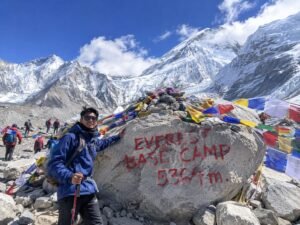 Compared to other routes featured in our overview of the best trekking in Nepal, the Everest trail carries higher flight and food costs due to its remote geography and lack of direct road access to Lukla. In return, your budget funds two weeks inside a UNESCO World Heritage landscape surrounded by four of the world’s six highest peaks—Everest, Lhotse, Makalu, and Cho Oyu—alongside centuries-old Sherpa monasteries, suspension bridges, and welcoming mountain lodges. When budgeted properly with realistic expectations, the experience delivers lasting value at every price tier.
Final Cost Summary and How to Plan With JPR Travel Agency
For the 2026 season, budgeting $1,300 to $1,500 USD covers a well-planned independent or budget group trek, while $1,600 to $2,200 USD covers a comprehensive guided teahouse package with domestic flights, permits, meals, and porters. Remember to keep an extra $250 to $400 USD in cash for trail utilities, tips, and weather contingencies.
If you want a transparent, itemised quote tailored to your travel dates, group size, and comfort level, reach out to the local specialists at JPR Travel Agency. Whether you need help securing Lukla flights, hiring a licensed Khumbu guide, or customising a full-board itinerary, contact JPR Travel Agency for up-to-date 2026 package details and practical trip assistance.
Frequently Asked Questions (FAQs)
1. How much does the Everest Base Camp trek cost in 2026?
In 2026, the Everest Base Camp trek costs between USD $1,100 and $1,500 (NPR 165,000–225,000) for independent or budget trekkers, $1,600 to $2,200 (NPR 240,000–330,000) for a standard all-inclusive guided teahouse package, and $2,800 to $4,500+ for luxury lodge treks. These figures are per person and exclude international flights.
2. Is a guide required for the Everest Base Camp trek in 2026?
No, a guide is not legally mandatory for the standard Everest Base Camp trek in 2026. Because the Khumbu Pasang Lhamu Rural Municipality manages its own local entry system rather than the TIMS system, independent solo trekkers are permitted in the Everest region. However, hiring a licensed guide is strongly recommended for altitude safety and logistics.
3. What permits are needed for Everest Base Camp and how much do they cost?
Foreign trekkers need two permits on the standard Lukla route: the Sagarmatha National Park Entry Permit (NPR 3,000 / ~$20 USD) and the Khumbu Pasang Lhamu Rural Municipality Entrance Permit (NPR 3,000 / ~$20 USD), totalling NPR 6,000 (~$40 USD) per person (plus NPR 390 if 13% VAT is billed separately on the park fee). A TIMS card is not required.
4. Are flights to Lukla included in the Everest Base Camp trek price?
Most standard and premium packages booked through trekking agencies include round-trip Lukla flights (worth roughly $350 to $514 USD depending on whether flights depart from Ramechhap or Kathmandu). Some low-cost or land-only packages exclude domestic flights, so always check your package inclusion list before booking.
5. How much cash should I carry on the Everest Base Camp trail?
If you have booked an all-inclusive package, carry NPR 30,000 to 45,000 ($200–$300 USD) in cash for hot showers, Wi-Fi, device charging, boiled water, snacks, and staff tips. Independent trekkers paying for rooms, food, and permits along the trail should carry NPR 90,000 to 120,000 ($600–$800 USD) in cash, plus an emergency buffer for flight delays.
6. Does travel insurance cover Everest Base Camp trekking and helicopter evacuation?
Standard travel insurance rarely covers altitudes above 3,000 meters. You must purchase a specialised high-altitude policy that explicitly covers trekking up to 6,000 meters and includes emergency helicopter medical evacuation (typically costing $150 to $250 USD for a two-week trek, protecting you against $4,000 to $8,000+ USD rescue bills).
1 thought on “The Ultimate Everest Base Camp Trek Cost Guide: What to Expect in 2026”
Pingback: Cheapest Everest Base Camp Trek: 2026 Budget Guide